Winter Scenes
In the early part of the 20th century, heavy snowfalls and periods of extreme cold were far more common than the winters we experience nowadays. People still had to go about their daily activities, with limited motorised transport and no central heating or double glazing at home. Yet these images also show many scenes of enjoyment, with frozen ponds giving a chance for skating and curling.
Skating at Thwaite Flat, Dalton-in-Furness
Skiers at Esk Hause, Lake District
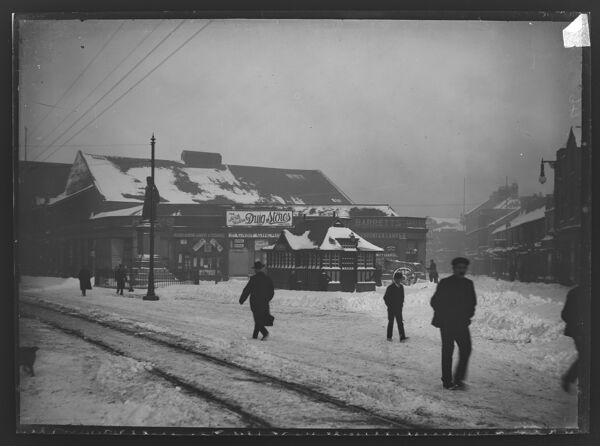
Cavendish Square and Paxton Terrace, Barrow-in-Furness
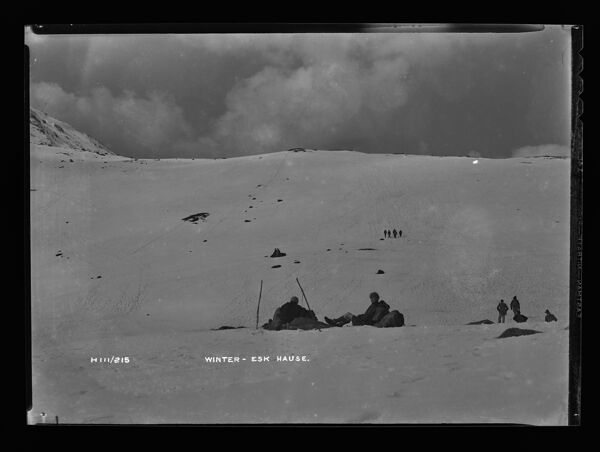
Winter view of slopes leading to Esk Hause, Lake District
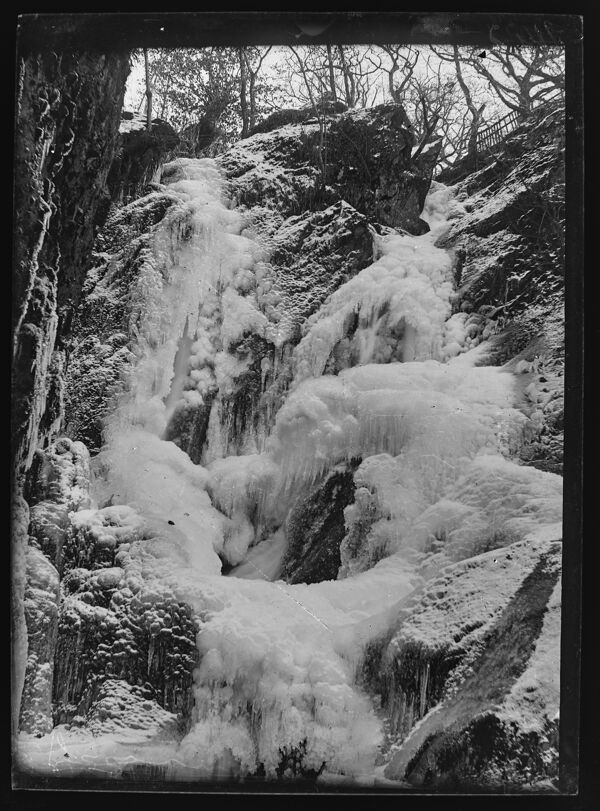
Frozen waterfall, Stock Ghyll, Ambleside
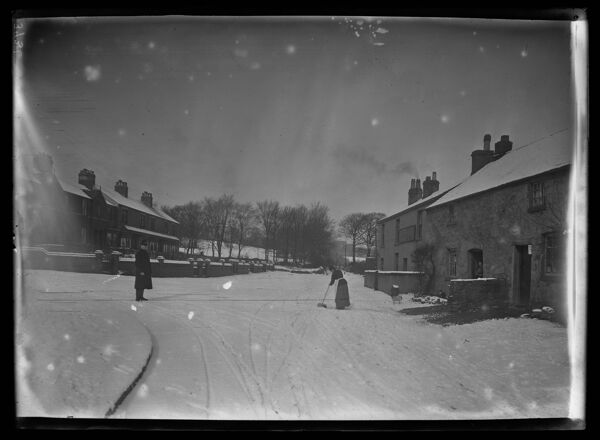
Old Newbarns Village, Hollow Lane, Barrow-in-Furness
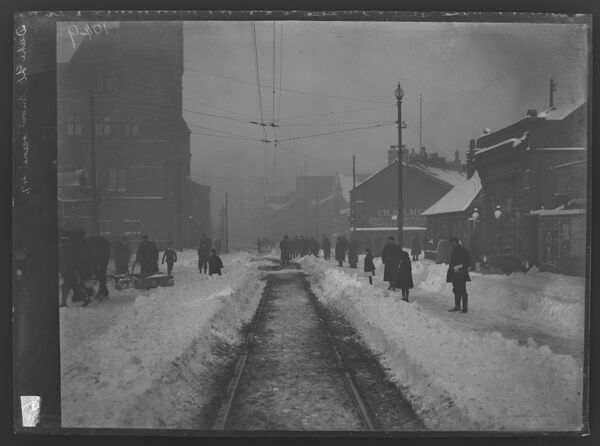
Duke Street outside the Town Hall, Barrow-in-Furness
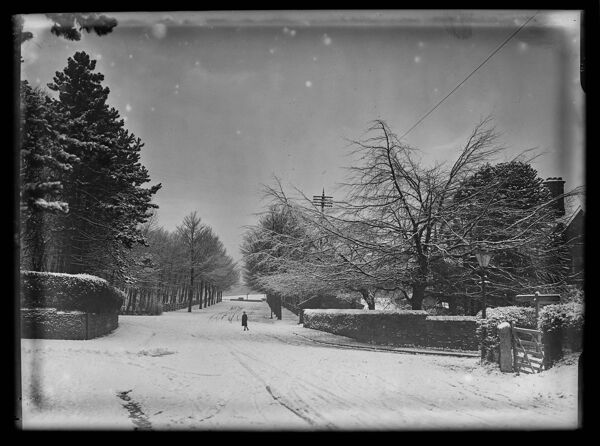
Rating Lane at Manor Farm, Barrow-in-Furness
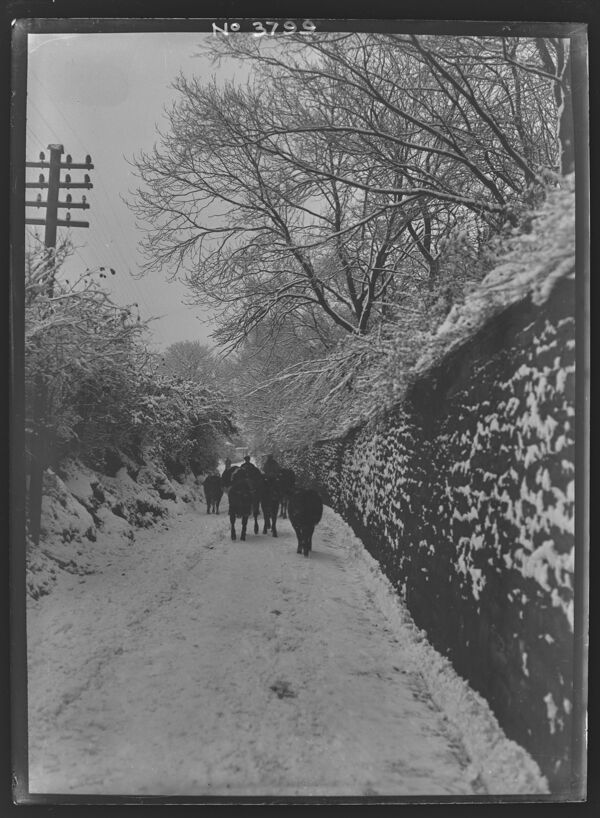
Hollow Lane, Barrow-in-Furness
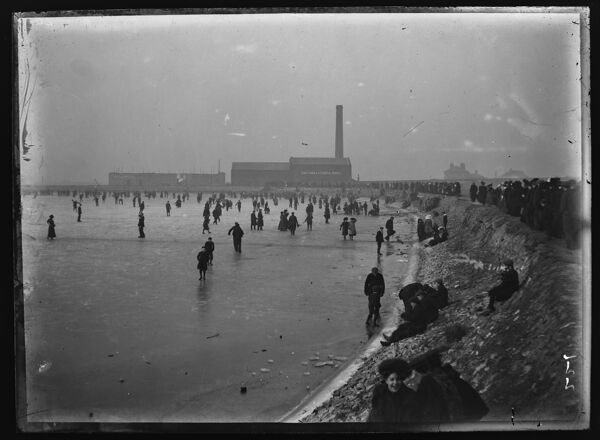
Skating on Ormsgill Reservoir, Barrow-in-Furness
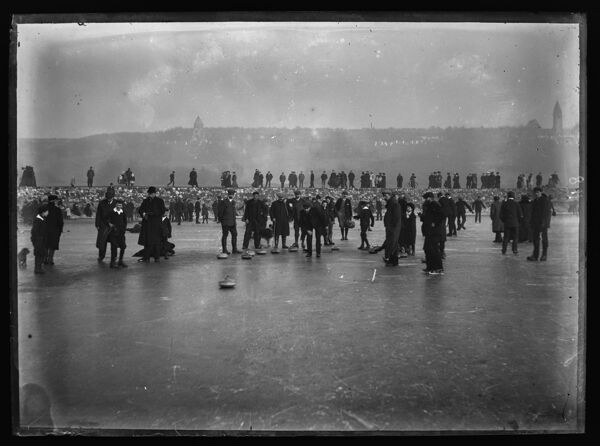
Curling on Ormsgill resevoir, Barrow-in-Furness
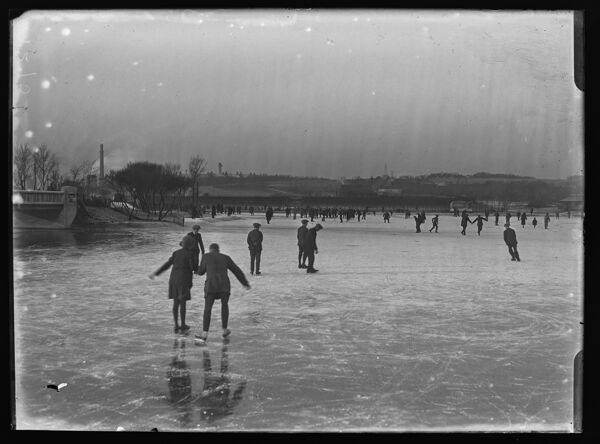
Skating on the Park Lake, Barrow-in-Furness
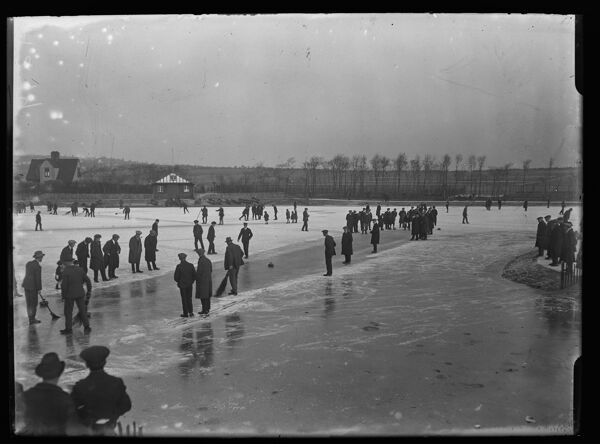
Curling on the Park Lake, Barrow-in-Furness
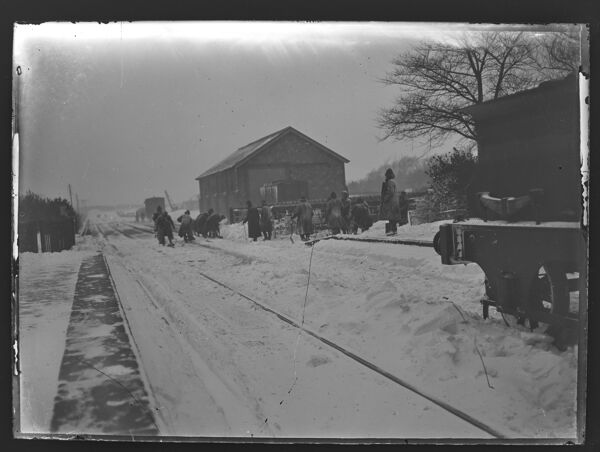
Snow clearing at Bootle station
Scafell range from Great Gable
Snow scene. Barrow in Furness Nov 15th 1915
Near Newby Bridge
Ennis Wood, Barrow-in-Furness
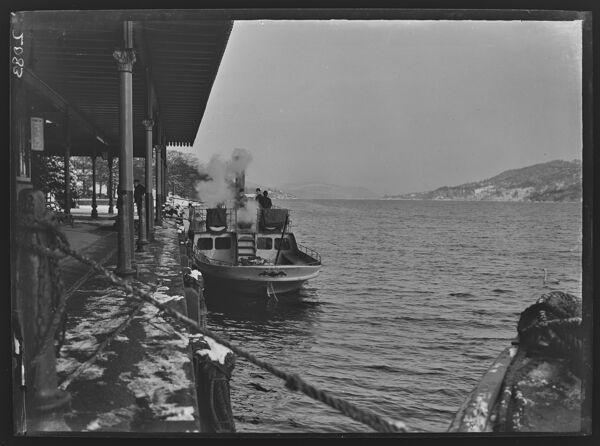
Steam Yacht 'Teal' at Lakeside
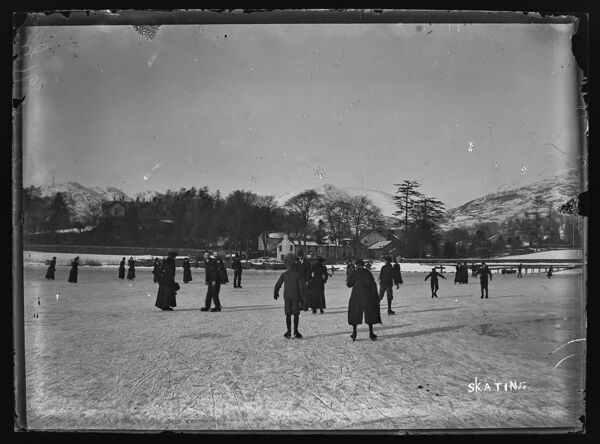
Skating on Windermere
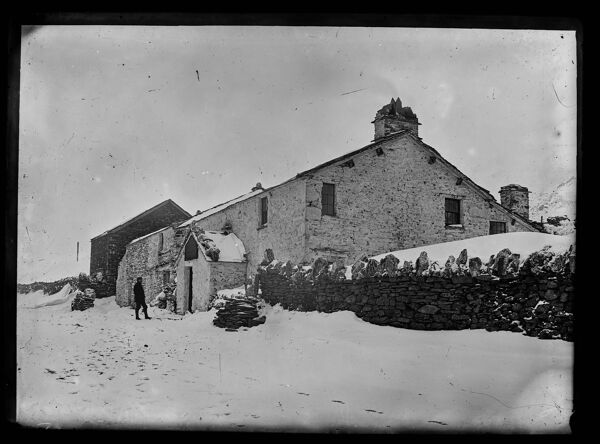
Kirkstone Pass Inn in Winter
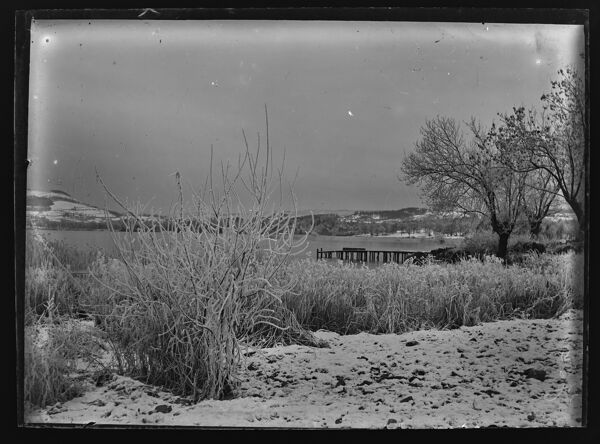
Holme Crag, Windermere
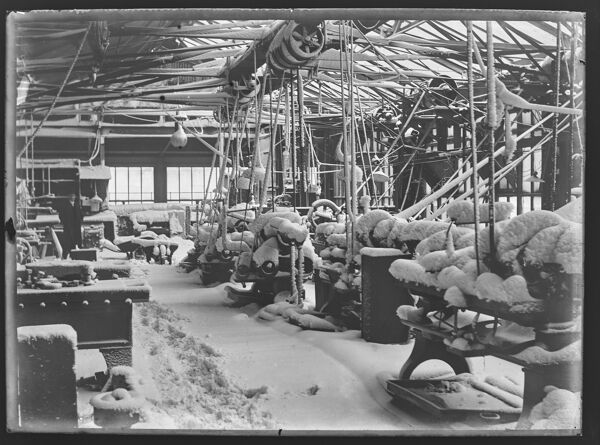
Works Interior, Barrow-in-Furness
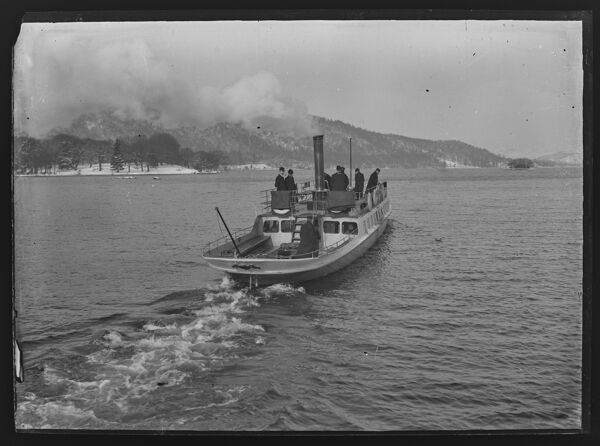
Windermere Steam yacht 'Teal'
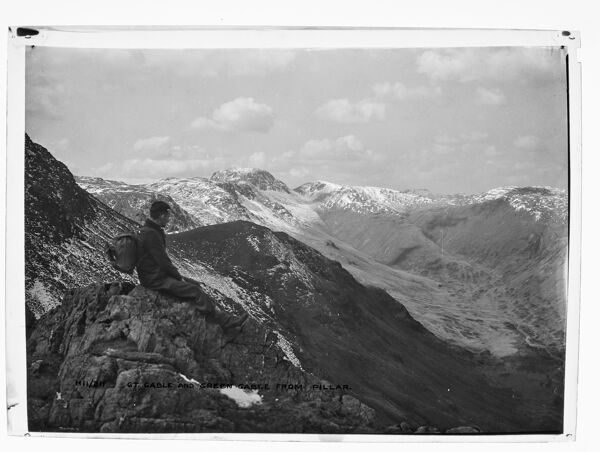
Great Gable from Pillar (image reversed left to right)
More curated collections
241, Sankey Family Photographic Archive © Cumbria Archives
no.241
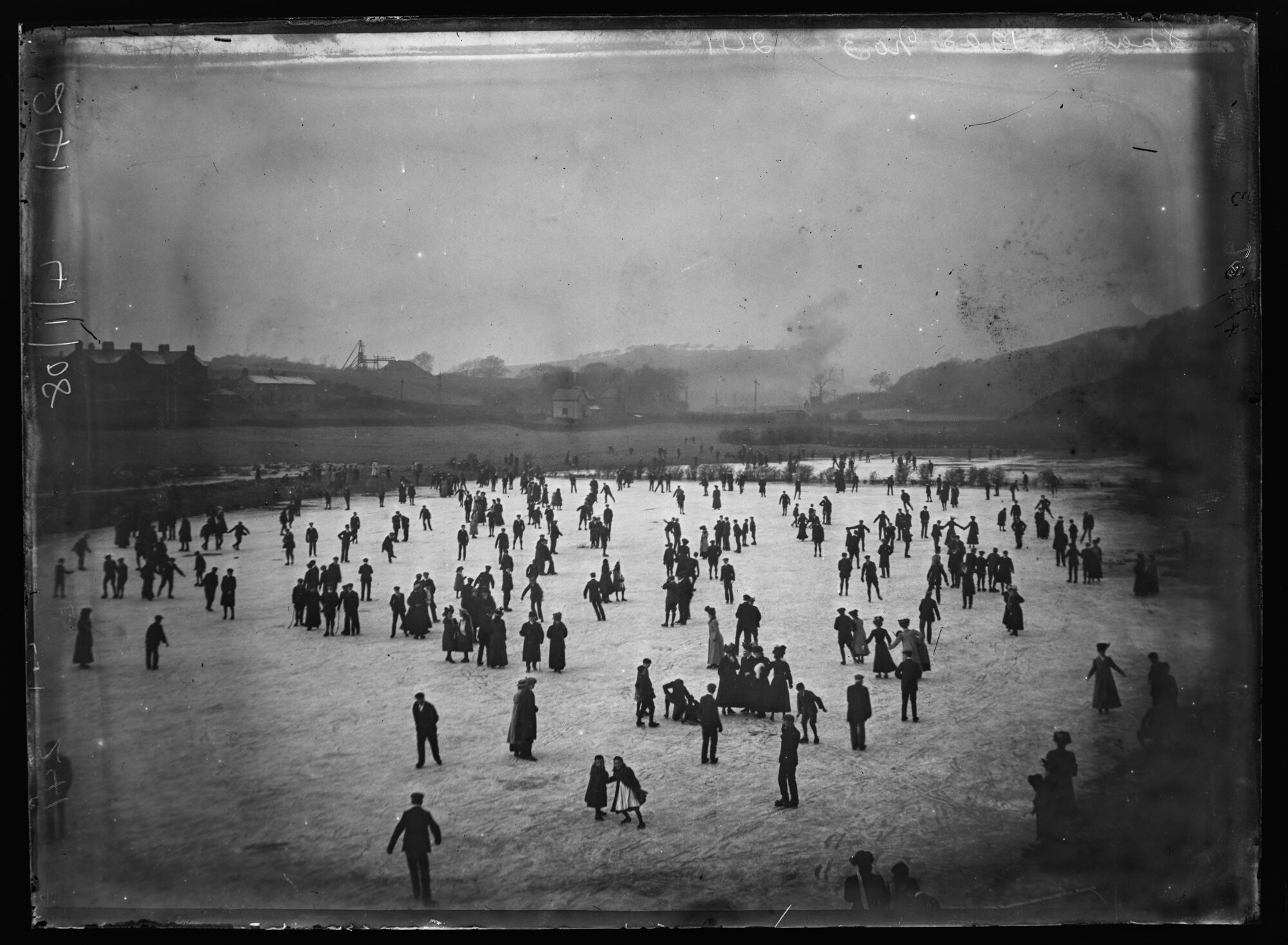
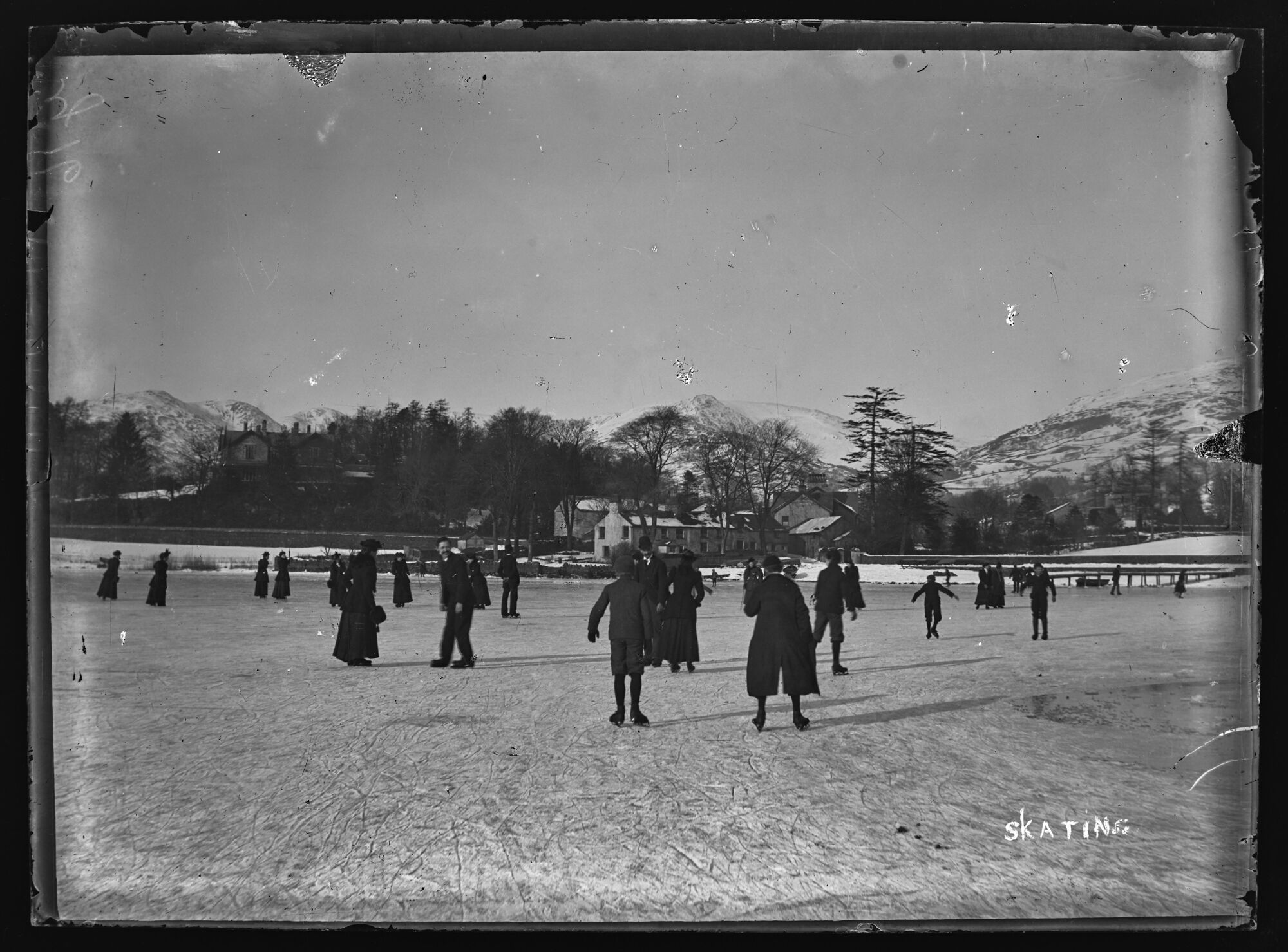
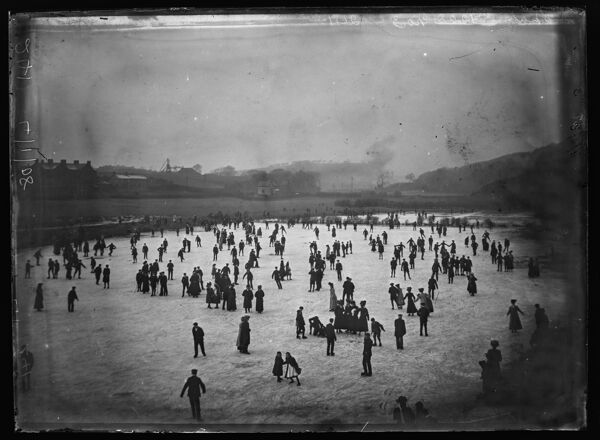
Skating at Thwaite Flat, Dalton-in-Furness
4th January 1908
The arctic weather made skating possible in many places throughout Britain for the first weekend of January 1908, before the cold gave way to rain and a milder atmosphere. Many travelled to the Lake District in anticipation of Windermere being safely frozen over, while others visited Coniston and Tarn Hows.
In the Furness district hundreds journeyed to Thwaite Flat, a favourite rendezvous for strollers. Although the image is dated for the Saturday, a considerable number ventured onto the ice on the Sunday, where besides breaking the Sabbath, they also risked breaking their necks. The photograph is very reminiscent of a Lowry winter scene.
H112A, Sankey Family Photographic Archive © Cumbria Archives
no.H112A
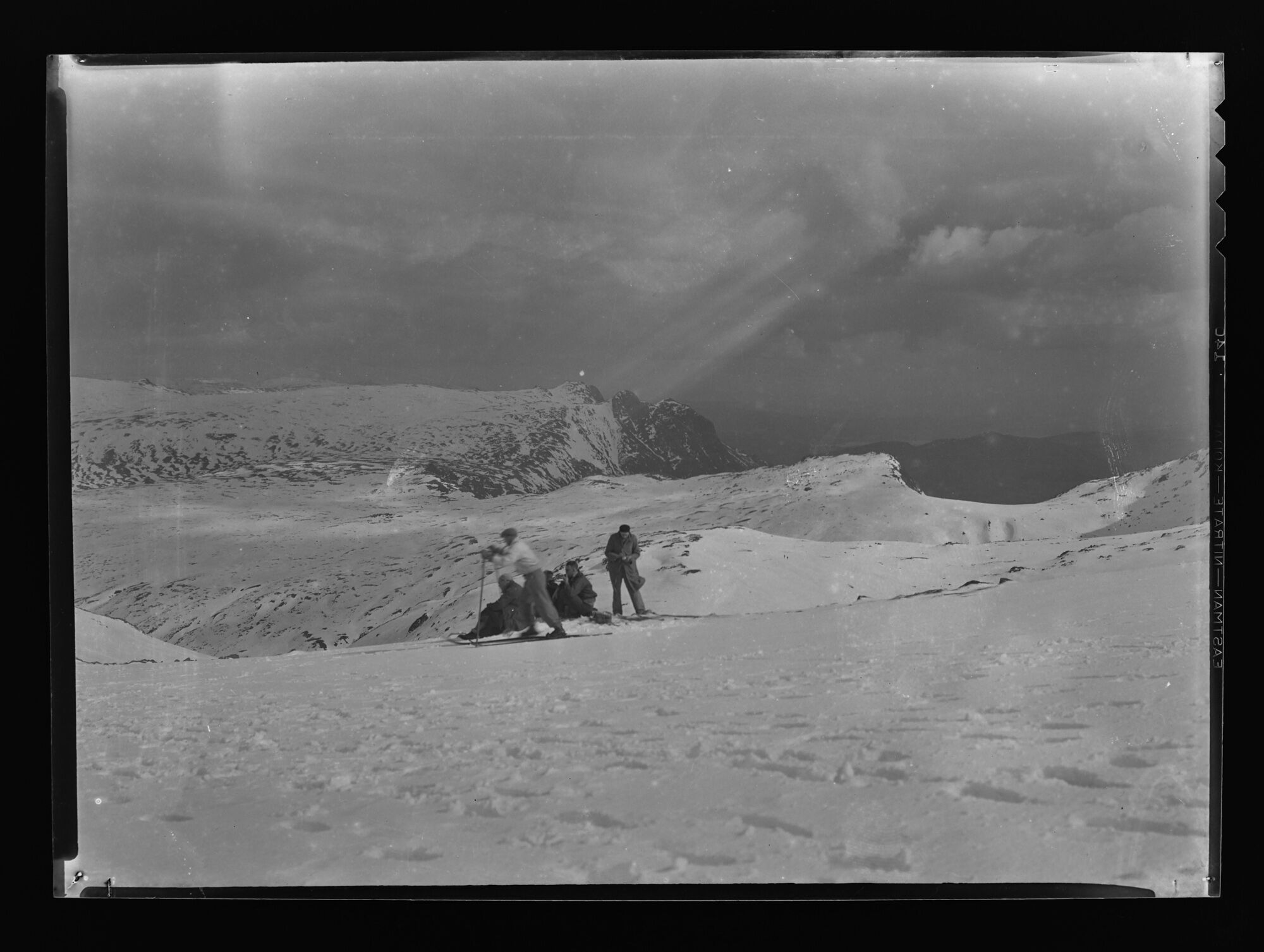
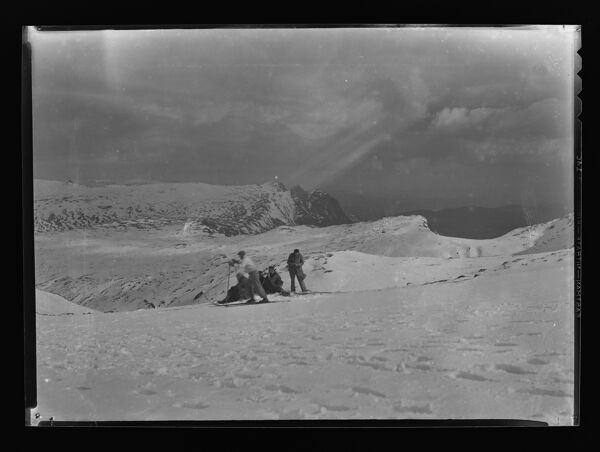
Skiers at Esk Hause, Lake District
Circa mid to late 1930's
This is almost the only known photo of skiers in the entire Sankey collection. Ski touring has always been a very minority activity in the Lake District, due to both the lack of ski-lifts and generally unpredictable snow cover. The main centre of what activity there is in the Eastern fells, particularly the northern end of the Helvellyn ridge.This photo is especially unusual in that it is taken at Esk Hause in the Western fells, near the Scafell peaks.
Not only is the ground there generally covered in boulders, but it is also relatively near the sea, which makes the snow cover much less reliable.
46, Sankey Family Photographic Archive © Cumbria Archives
no.46
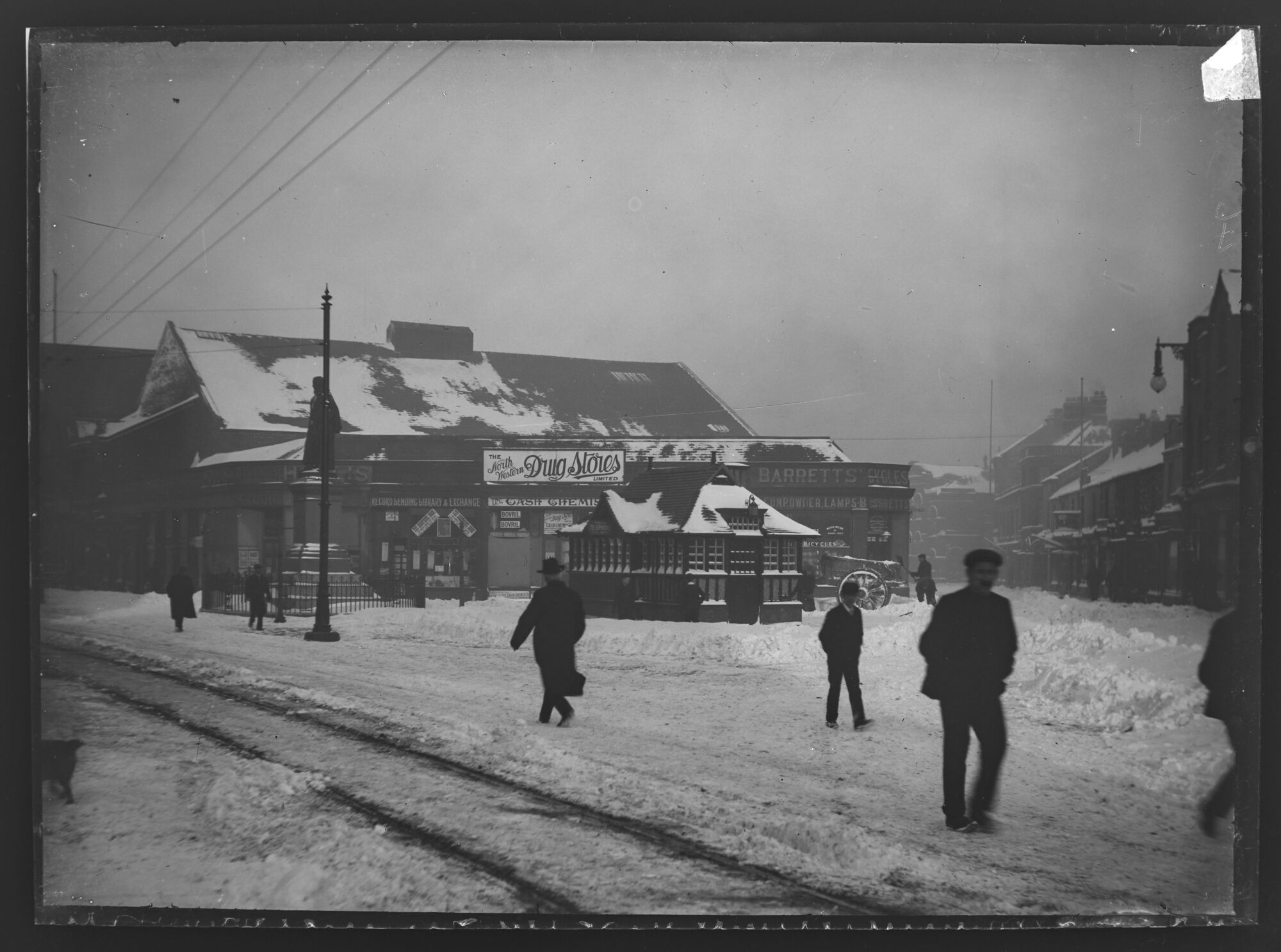
Cavendish Square and Paxton Terrace, Barrow-in-Furness
Early 20th Century
The statue of Lord Cavendish overlooks the snow-covered square on Duke Street. Opposite, unseen, is Barrow’s imposing Town Hall. Barrovians carry on with their daily business, undeterred by the treacherous conditions. The tram lines have been cleared of snow to ensure that the electrified trams can continue to take people to work at the shipyard, or to one of the many other industries in and around the town and docks A public telephone office and cab rank sits in the middle of the square. The businesses in the background are quite different to what we would see on a high street today.
There’s a record lending library and exchange, a ‘cash’ chemist, and a cycle shop – which also sold gunpowder!
H111A, Sankey Family Photographic Archive © Cumbria Archives
no.H111A
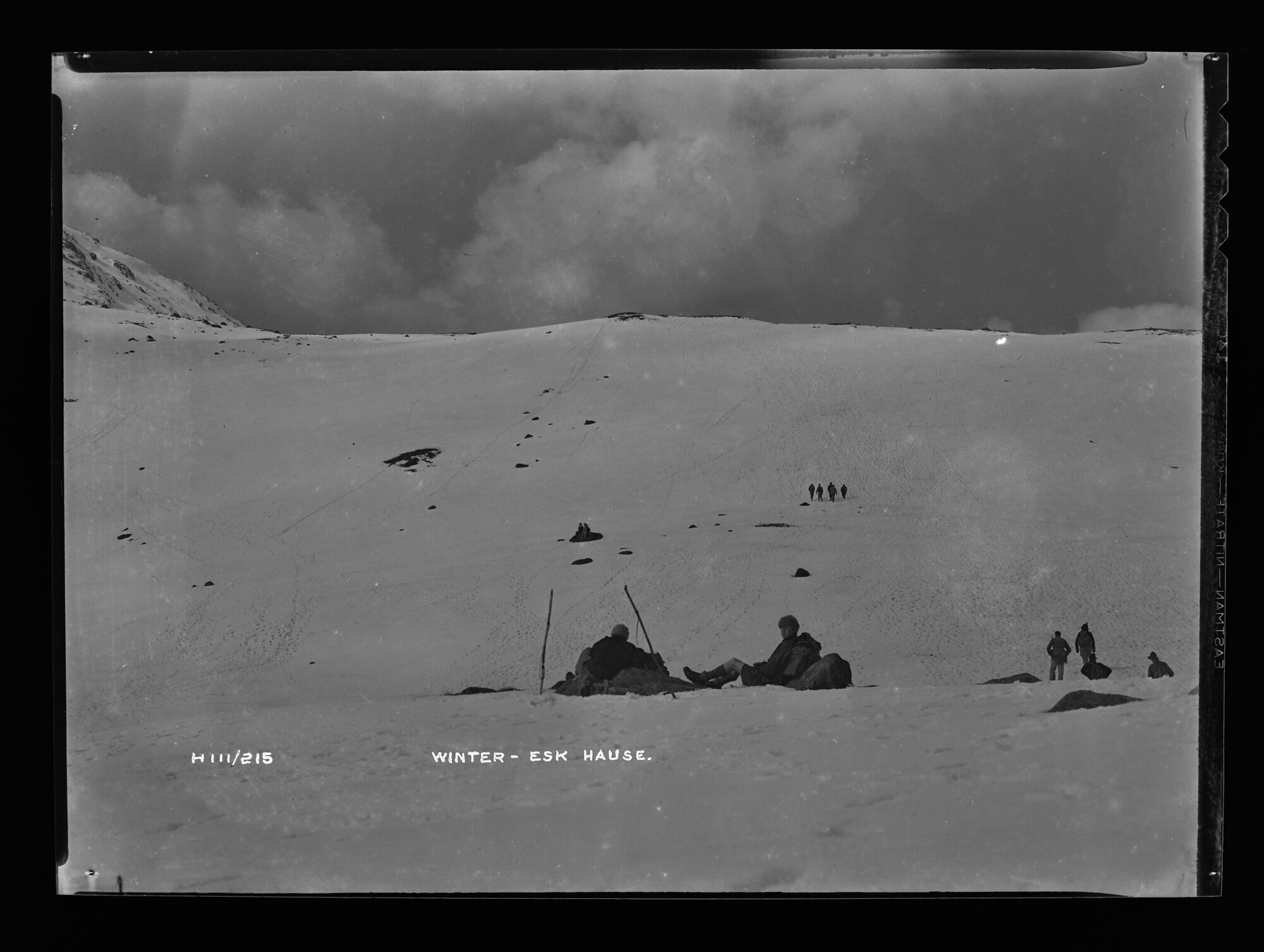
Winter view of slopes leading to Esk Hause, Lake District
Circa mid to late 1930s
This is a mountain pass in the western Lake District, 749m/2490ft high and 4.4Km (2 ¾ miles) from the nearest road. Even today it is not easy to reach in winter, yet the picture shows thirteen people who did, and the footsteps of many more.This possibly indicates the changing attitudes towards the outdoors at the time.
Industrialisation moved people into towns where living standards were poor. One means of temporary relief was walking in the countryside.Most land was private. Rambling clubs such as the ‘Sunday Tramps’ (founded in 1879) formed and began campaigning for the legal ‘right to roam’. From the 1920s reductions in working hours, rising wages and falling travel costs helped walking become very popular. By the 1930s many thousands were out walking at the weekends.
G22, Sankey Family Photographic Archive © Cumbria Archives
no.G22
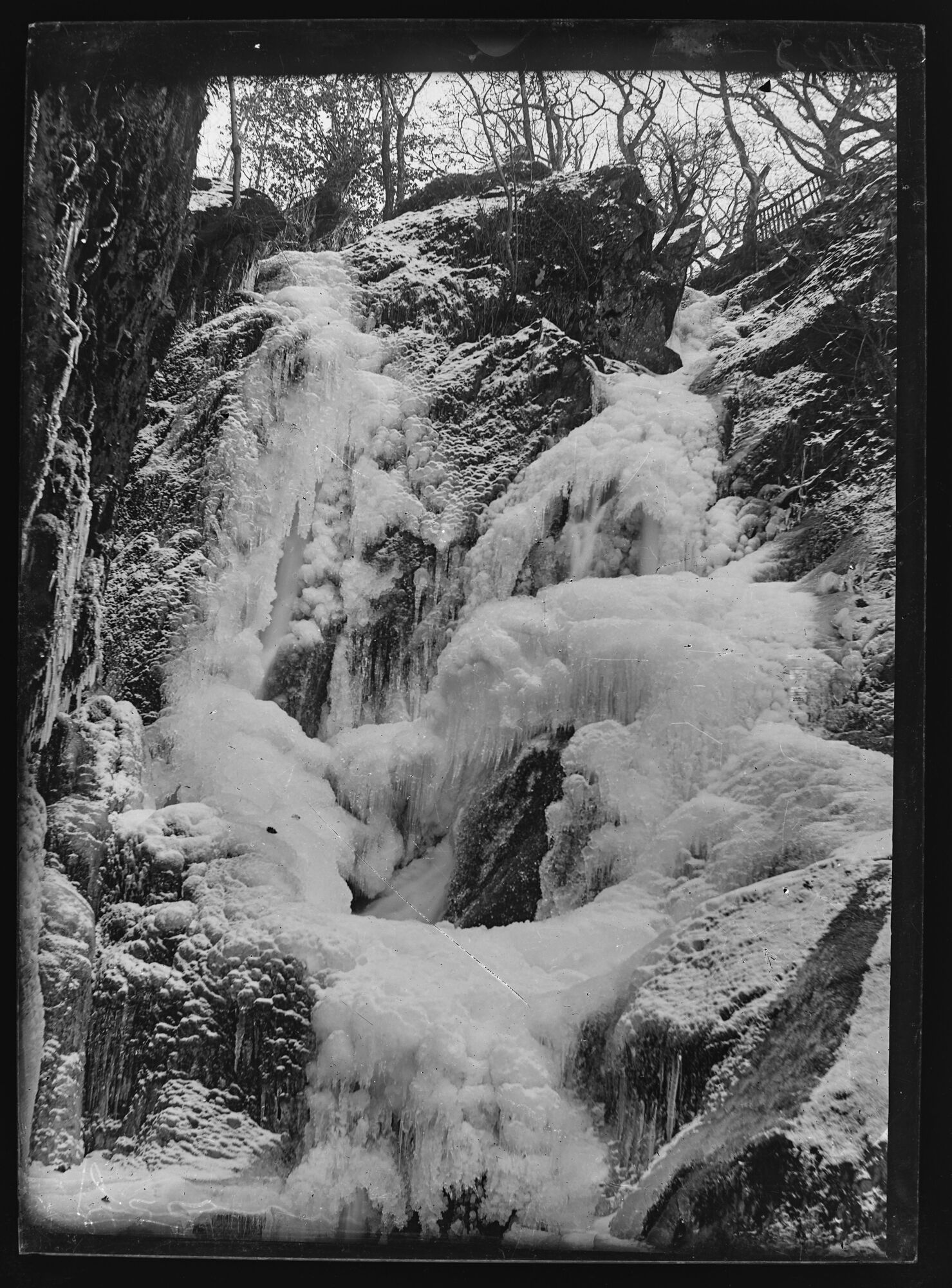
Frozen waterfall, Stock Ghyll, Ambleside
Circa mid 1920s
When I think of the Sankey’s photographic work I often imagine open streets, factory floors or mountain scenes. The camera positioned to take in as much information as possible. Occasionally we find photographs where the camera has been taken closer to the subject. A birds nest, a person’s portrait, even a cauliflower plant.
These close ups offer a different view of Sankey’s world; new details otherwise hidden. This image reminds me of those special icy days we get every once in a while, when the bleak and grey winter landscape is transformed into something more magical. Suddenly temporary sculptures and shapes conceal what’s beneath. The Sankeys, like me perhaps, were also fascinated by this transformation and felt it worthy of capture on photographic film.
3736, Sankey Family Photographic Archive © Cumbria Archives
no.3736
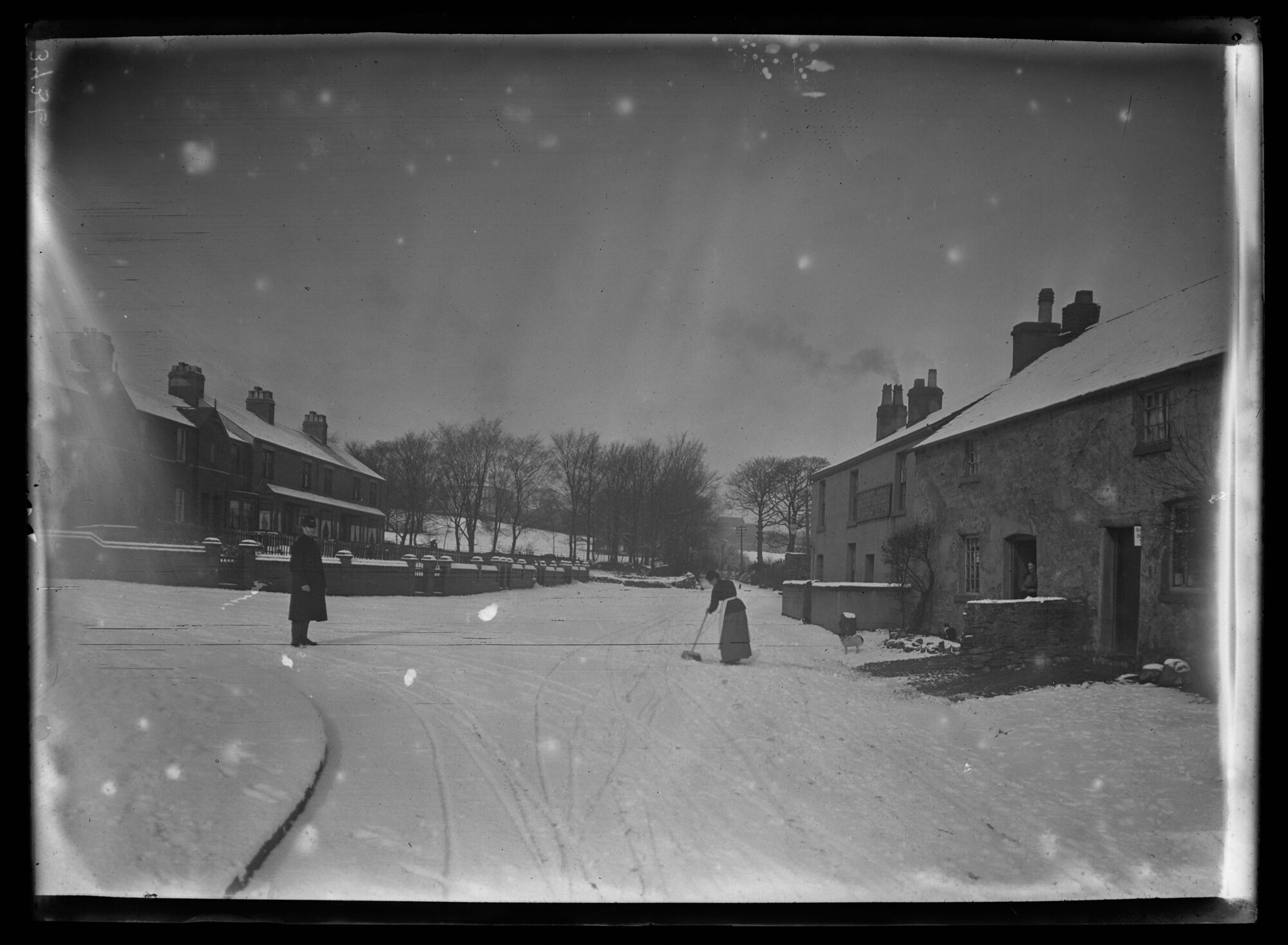
Old Newbarns Village, Hollow Lane, Barrow-in-Furness
Circa 1920
In the aftermath of snowfall, bemused onlookers, both human and animal, look on as an industrious shopkeeper outside Ash Tree Stores attempts to clear the whole street with her brush.
Footprints and tracks (mainly of bicycles) lead up Fairfield Lane on the left, and straight up Hollow Lane to the Strawberry Hotel on the corner of Abbey Road; or maybe the other way, to Hector Street, Harrel Lane, or the farmhouses.A house now hidden from the photographer’s vantage point (Spring Bank) can be seen centre left in the distance, with Saint Paul’s Church to the right.The cheeriest blaze is in the grate of the Farmers Arms, where Mrs Fisher presides.
47, Sankey Family Photographic Archive © Cumbria Archives
no.47
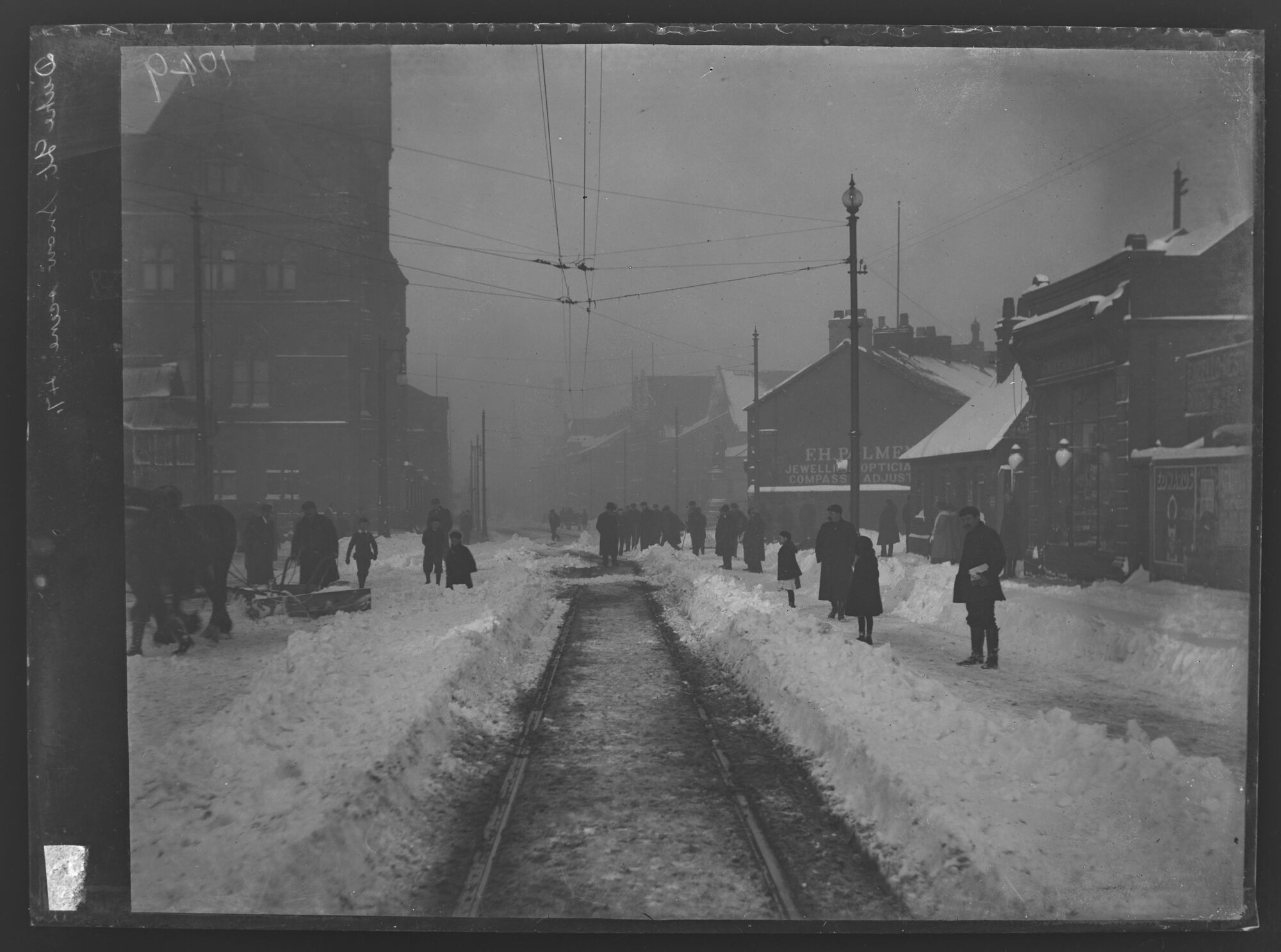
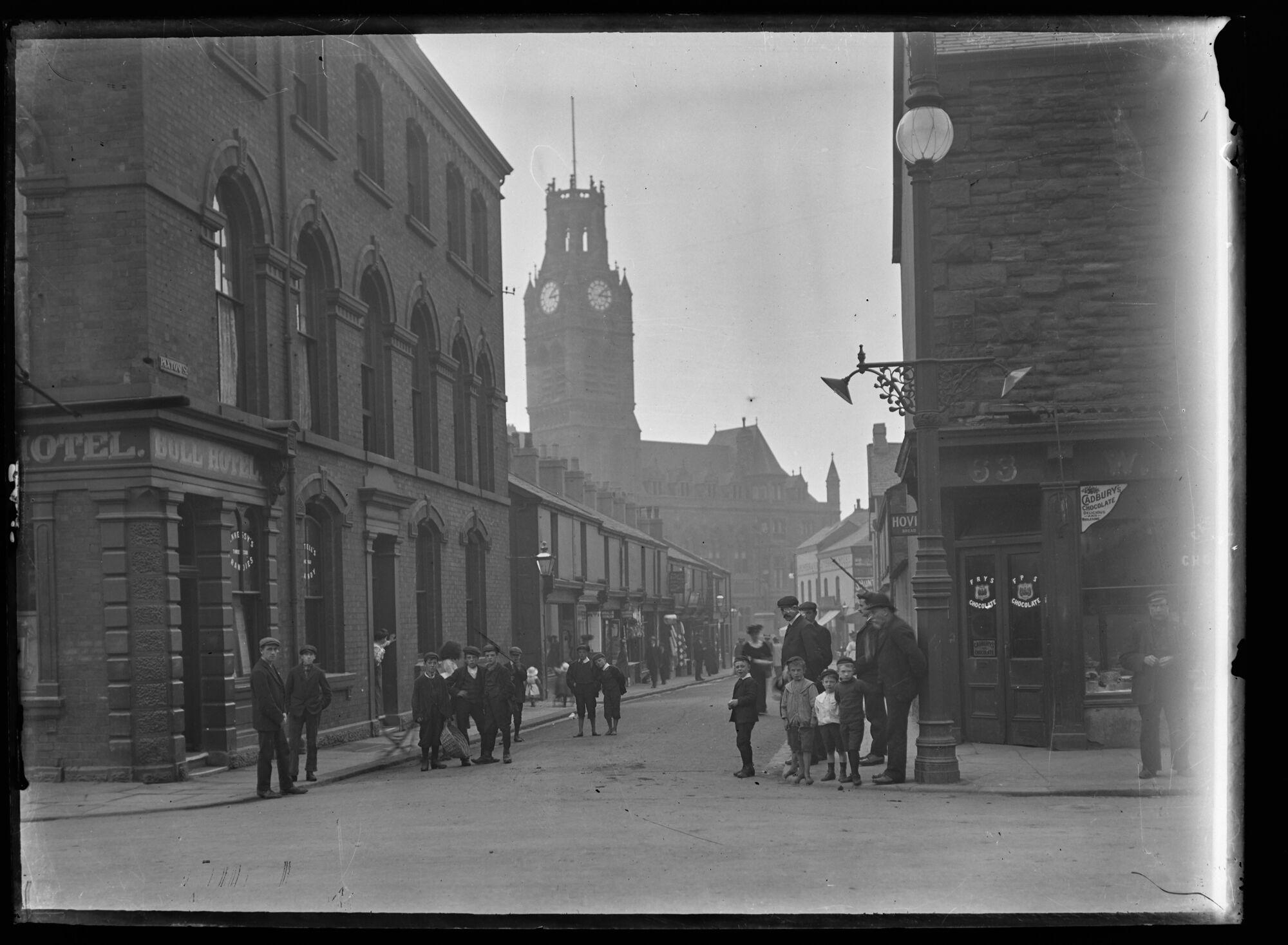
Duke Street outside the Town Hall, Barrow-in-Furness
Early 20th century
This is not the prettiest of snow scenes, but still very evocative. It’s a cold, smoky image of Duke Street, probably taken around 1912. The central perspective, the cleared tram track, draws you into the scene. The Town Hall towers above the man steering the very important horse-drawn snow plough, who is busy providing a pathway for pedestrians on the left side of the track. Various people are dutifully queueing, to the right of the track, waiting hopefully for a tram to arrive. The whole scene looks so enclosed in the grey mist.
The streetlight is unlit – so are we looking at the beginning of the day or the approach of evening?
7371, Sankey Family Photographic Archive © Cumbria Archives
no.7371
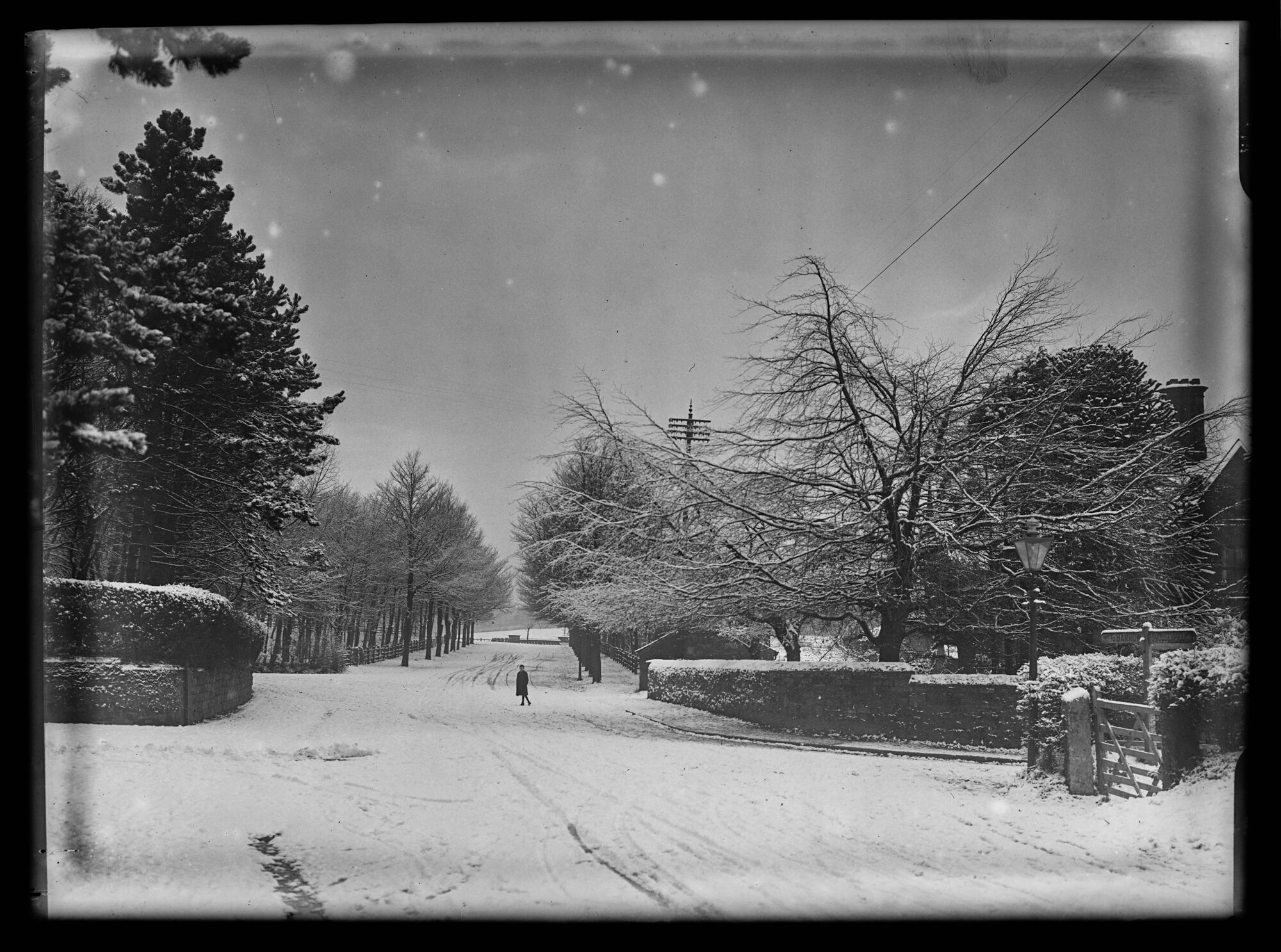
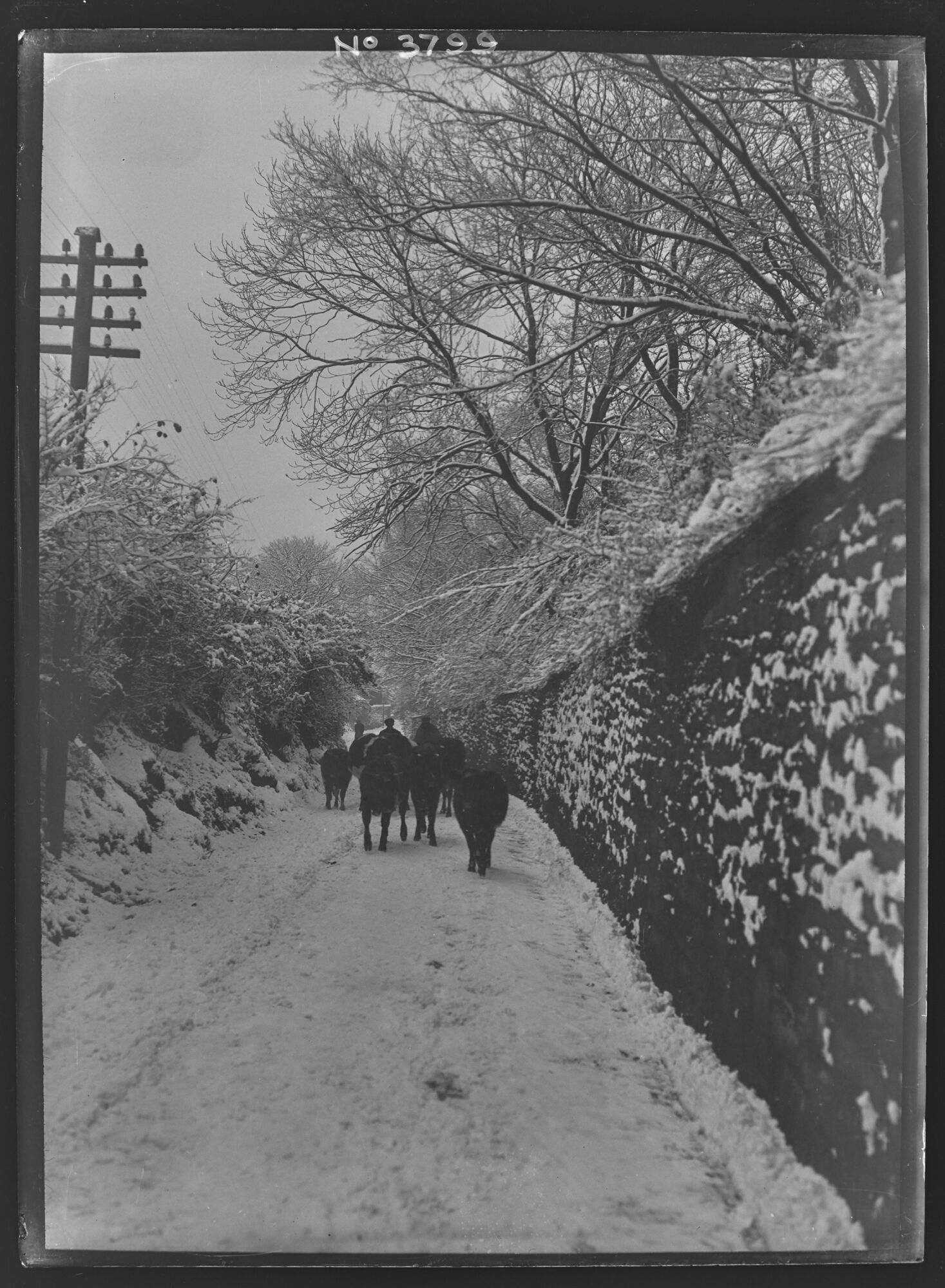
Rating Lane at Manor Farm, Barrow-in-Furness
Circa 1930s
Fancy walking to school in shorts in snow? Does this picture lend credence to those who remind the young that “times were hard in those days”? Perhaps it was soon after Easter, and summer uniform was the requirement? The nearest school was Hawcoat and Newbarns Day School, well over a mile away.
The glow in one of the farm's windows might imply a roaring log fire, but is probably just electric light. This view is unchanged today apart from the addition of road signs. The 'New Manor House' (right) was built soon after the railway was run through the valley beside the ruins of the abbey. Sadly, the original 16th century Manor House was demolished to make way for the Furness Abbey Hotel, and adjacent Abbey Station (now also gone).
3799, Sankey Family Photographic Archive © Cumbria Archives
no.3799
Hollow Lane, Barrow-in-Furness
15th November 1915
In this hollow lane, which leads up from Newbarns village to the Strawberry Hotel on Abbey Road, there is little space for Edward Sankey to stand aside. Are the cattle being driven back to a snowy field, or to a barn with hay and shelter?Although two sets of houses (Fairfield Terrace, 1878 and Strawberry Terrace, 1885) had been built on the lane, the farms at the bottom of the hill – Sandylands, Newbarns and The Yews – remind us that much of the area, of what is now suburban Barrow, was still open fields at this time. When this image was taken, development was slowly encroaching.
There were houses the length of Fairfield Lane by 1915, and most of the streets behind Abbey Road, from Cheltenham Street to Bowness Road, had also been built.
221, Sankey Family Photographic Archive © Cumbria Archives
no.221
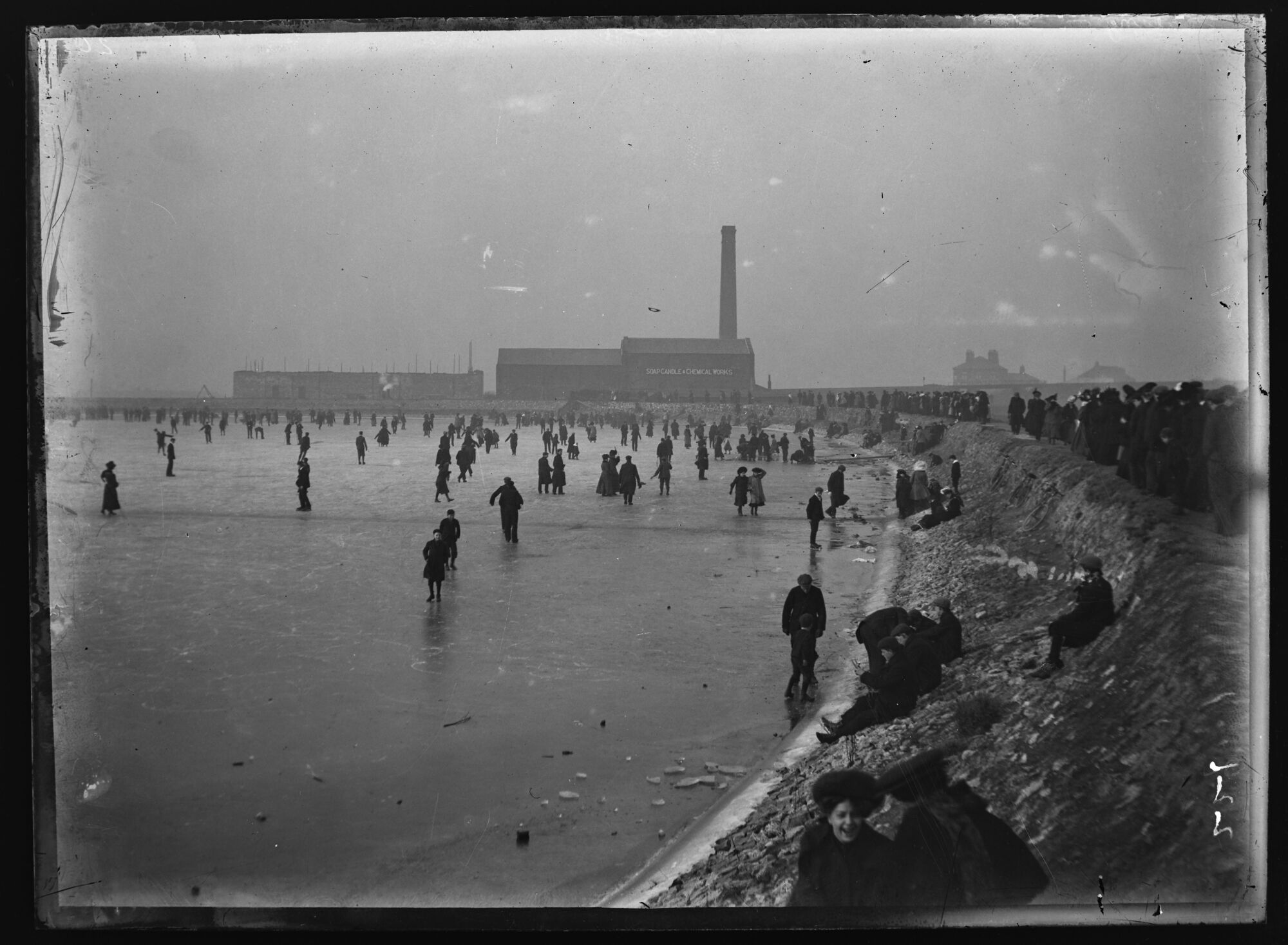
Skating on Ormsgill Reservoir, Barrow-in-Furness
Early 20th Century
The townsfolk of Barrow-in-Furness enjoying their recreation time on the ice on Upper Ormsgill (Steelworks) Reservoir. Although the ice is obviously thick enough to support the people, there is no snow on the ground.Very few of the revellers are wearing ice skates, most are walking gingerly. The vast majority are wearing headgear of some sort. P Hodgson & Co’s Soap and Candle Works are shown in the background, with The Ormsgill Hotel faint on the right.
118, Sankey Family Photographic Archive © Cumbria Archives
no.118
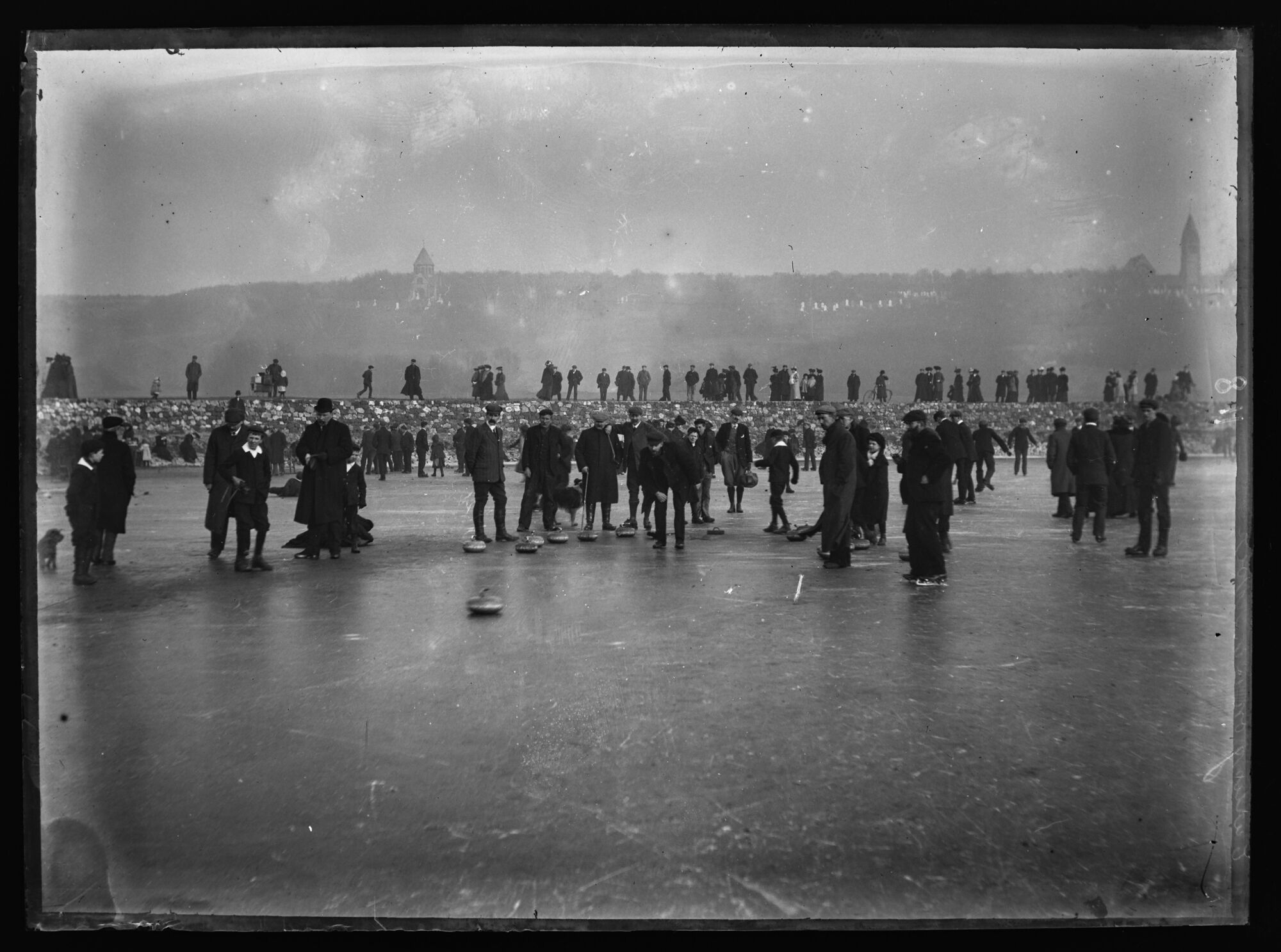
Curling on Ormsgill resevoir, Barrow-in-Furness
Early 20th Century
Barrovians were a hardy breed, living on this exposed peninsula, open to the prevailing winds and rain. Undeterred by the freezing temperatures that had turned the Steelworks reservoir at Ormsgill into a skating rink, the locals had flocked to the ice to make the most of the conditions and the reservoir was a hive of activity.
We see resourceful locals playing a game of curling on the ice. Wearing little more than a cap and extra pullover, the children were enjoying the slippery conditions, some wearing ice skates. Women in their 'Sunday best', wearing long dresses and hats, can be seen deep in conversation. In the background is the cemetery, with the Catholic Chapel (left) and the Church of England and Non-Conformist chapels to the right.
A275, Sankey Family Photographic Archive © Cumbria Archives
no.A275
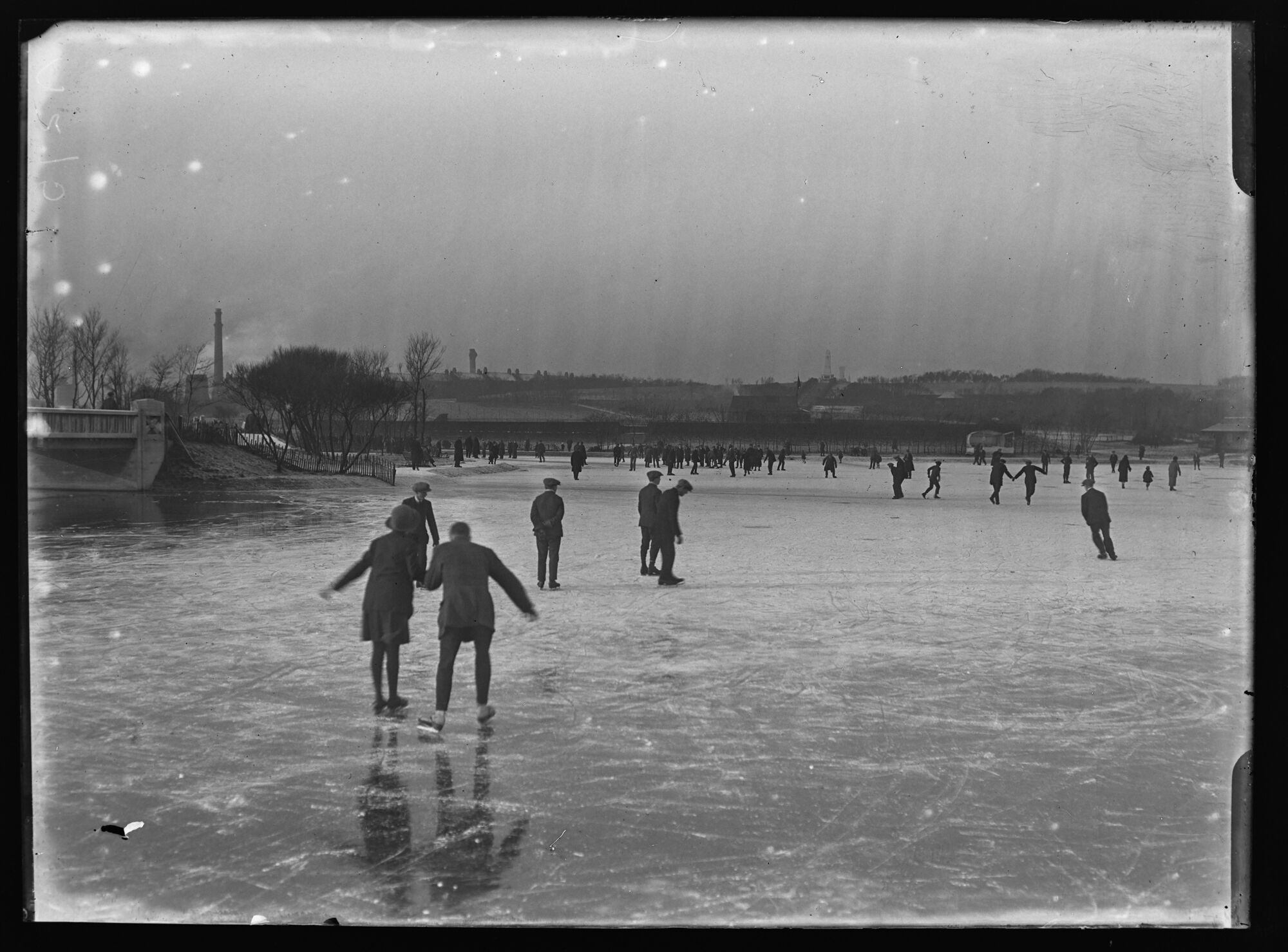
Skating on the Park Lake, Barrow-in-Furness
4th December 1925
Cold weather during the second week of November 1925 then became very cold, and this continued through the first week in December, even in the normally relatively mild Furness area. The park lake in Barrow-in-Furness froze over and the ice was sufficiently thick to allow skating.
The number of people with skates is surprising, but more surprising is the gender imbalance with very few females (and not many children).The following Monday the Lancashire Evening Post reported skating in full swing in Furness during the weekend on all the shallow waters and some deeper waters, too. Thousands visited Barrow Park, hundreds skating or otherwise amusing themselves on the park lake.
A279, Sankey Family Photographic Archive © Cumbria Archives
no.A279
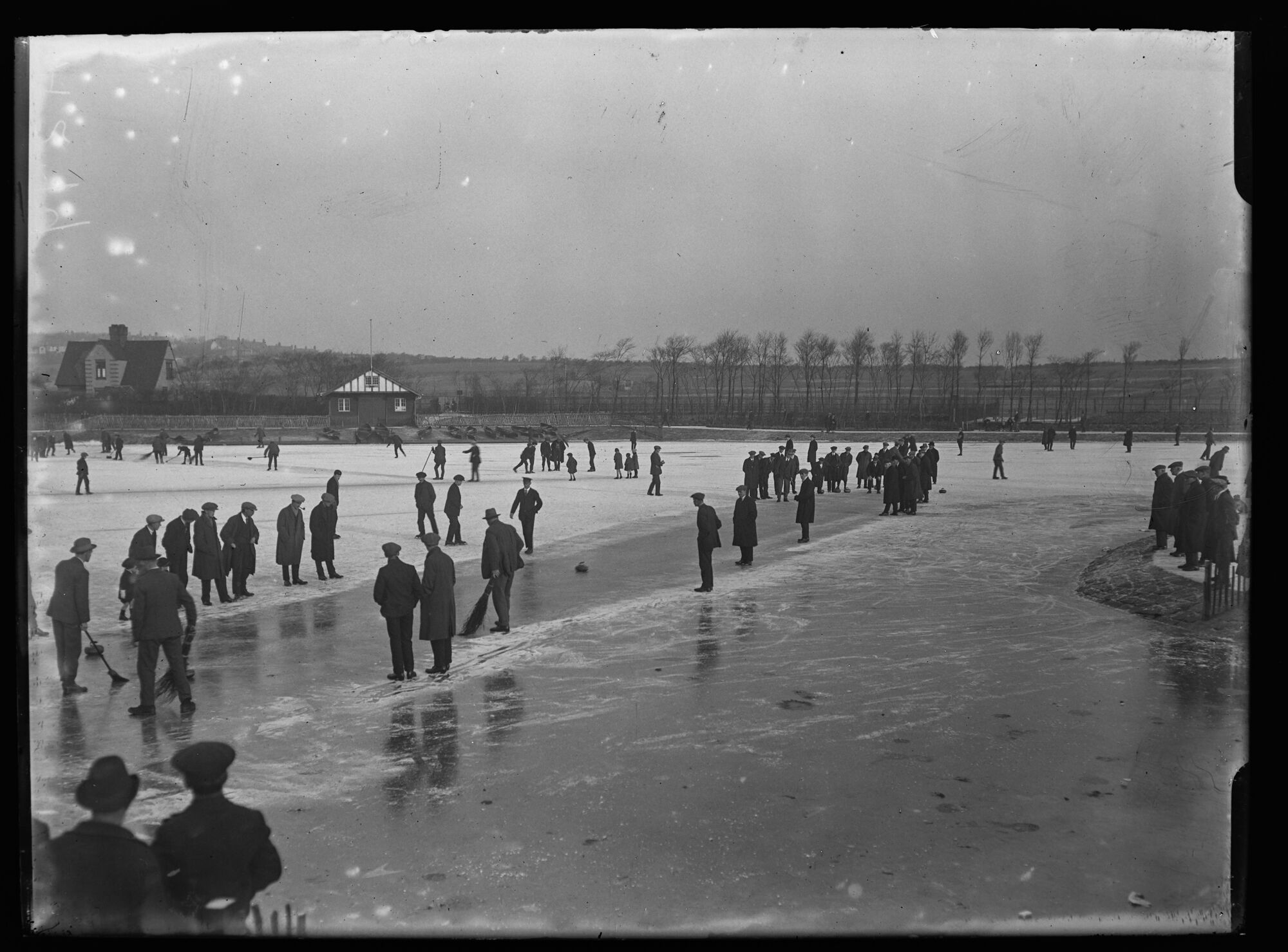
Curling on the Park Lake, Barrow-in-Furness
4th December 1925
At least two 'ends' of curling are taking place. Men and boys are taking a keen interest. Some of the people are wearing skates, but not all. It is either a bright day, or the ice is very clear: reflections are good.The majority of the men wear an overcoat and hat; some have scarves, or mufflers.
Two of the hats are peaked caps, possibly of park-keepers. The boathouse is relatively unchanged today, though the flagpole and window above the central door have gone.If the date is correct, then it must be before work started on building the Boys Grammar School on the fields beyond the boathouse. This perhaps explains the solid wooden fence on the far side.
2347, Sankey Family Photographic Archive © Cumbria Archives
no.2347
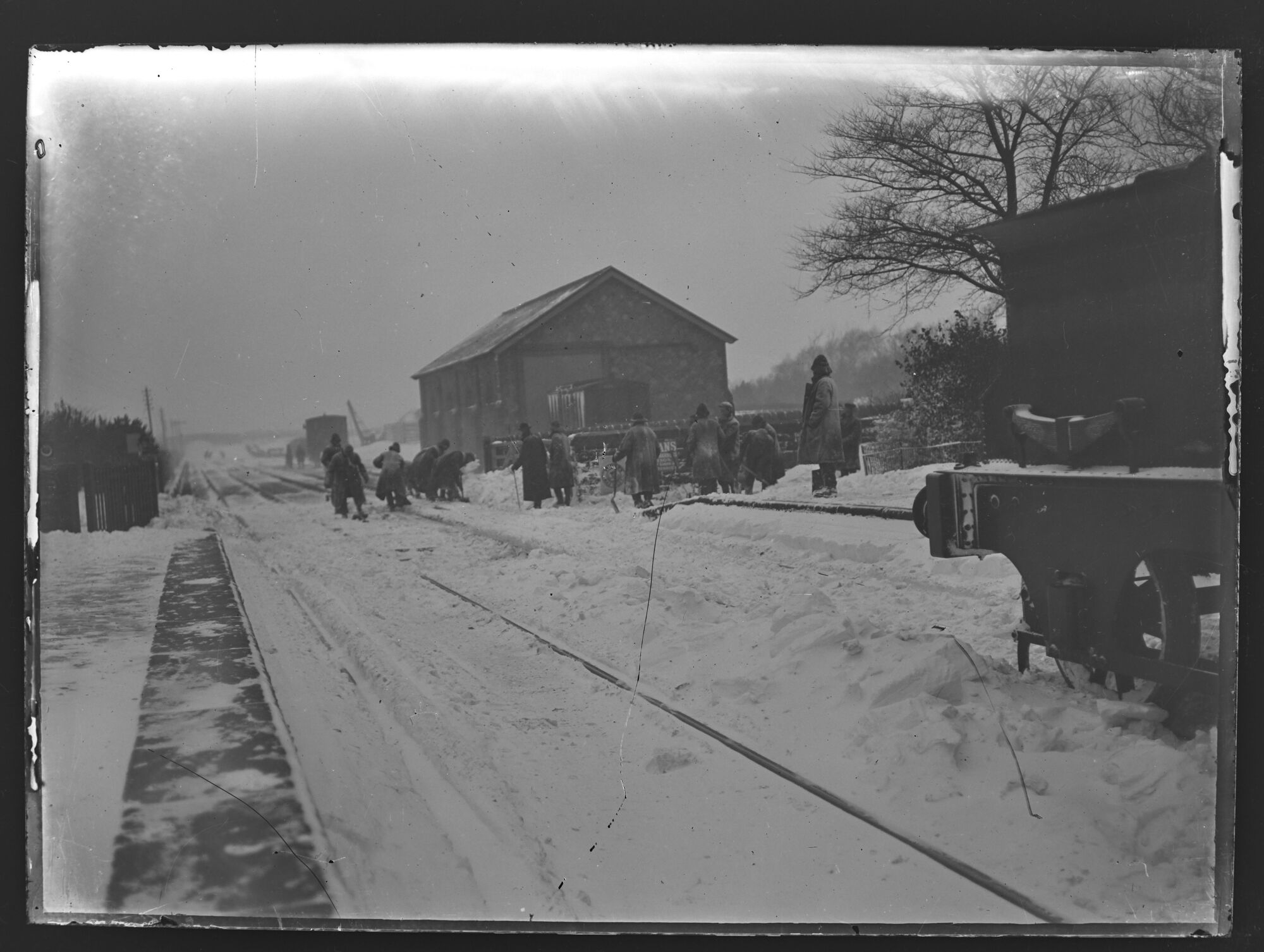
Snow clearing at Bootle station
29th December 1908
What makes a ‘bad’ winter? I’m sure the ice climber and these railway workers would not agree on the merits of a prolonged cold spell. In the days before private cars, keeping the railways open was an important task especially for isolated rural communities.With the group further north up the track, this gang numbers twenty men, a reflection on the size of the Furness Railway work force at the time.
They have a fine range of coats and hats – but not a high-viz vest amongst them.Did you notice one man has a stick and a bowler hat and there is an advert for Players Navy Cut?
E527A, Sankey Family Photographic Archive © Cumbria Archives
no.E527A
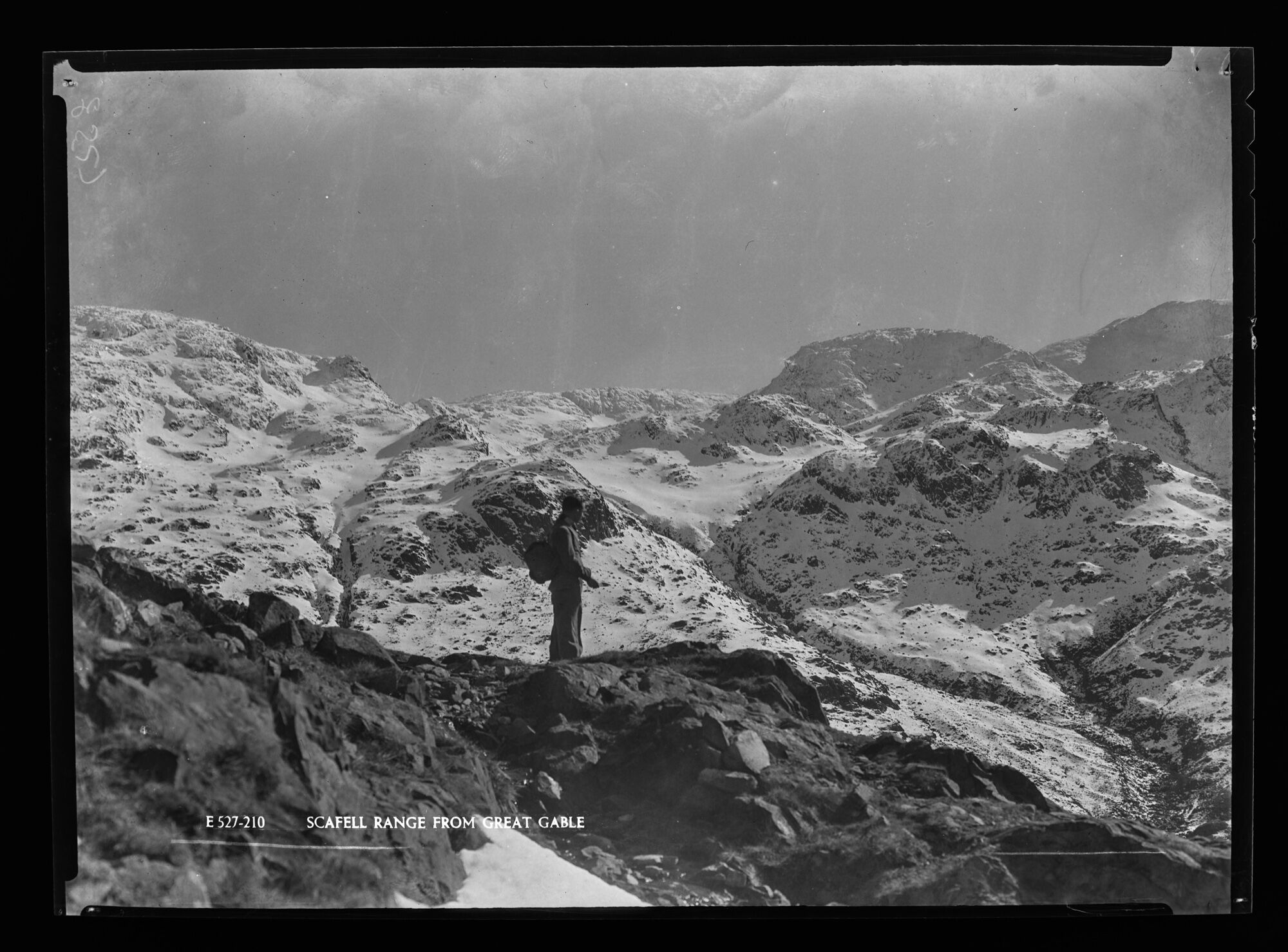
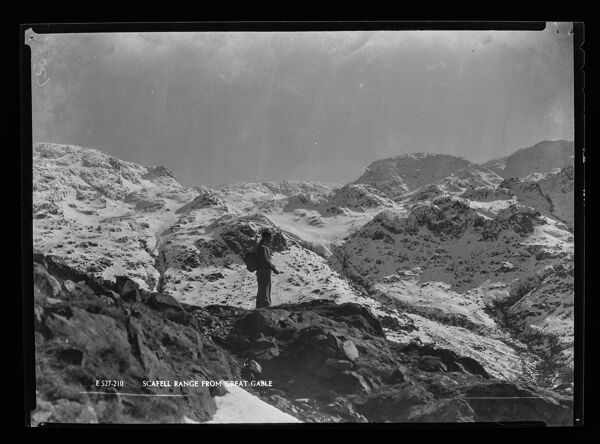
Scafell range from Great Gable
Circa 1950
This must be a climber's dream scenario – sharp winter light on snow high in the fells. Winter mountains are very different from slogging up eroded footpaths. With the right experience and equipment you can make judgements on route-finding, and safety, like a proper explorer.Below the climber, you can see the junction of Greta Ghyll and Piers Gill. The skyline goes from Great End on the left across Broad Crag to Scafell Pike. The Corridor Route crosses to Lingmell Col somewhere in-between.The climber is without ice axe, fleece or Goretex.
He would have been better placed against the snow rather than the crag but the photographer did well to get there in the first place.
3796, Sankey Family Photographic Archive © Cumbria Archives
no.3796
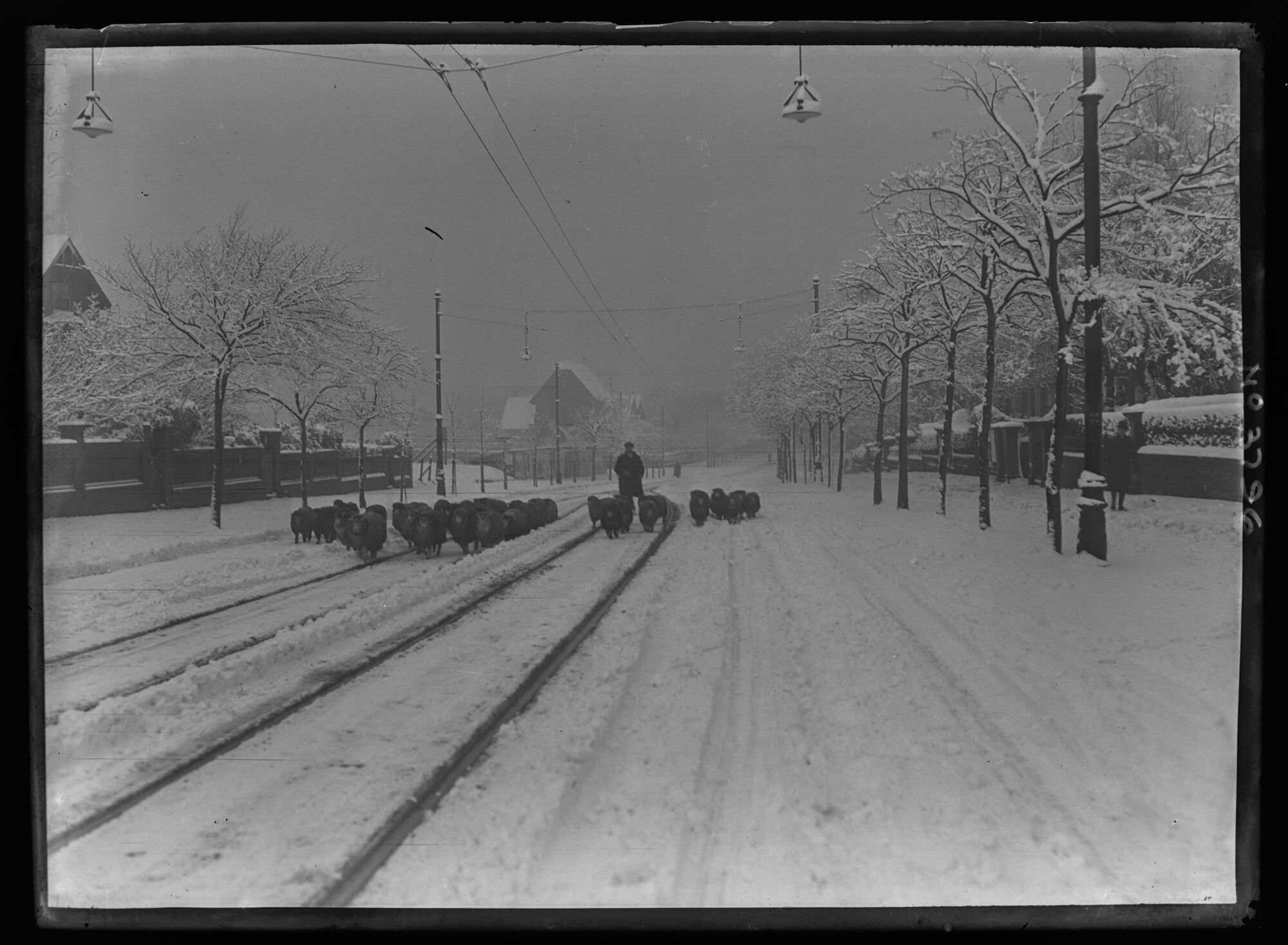
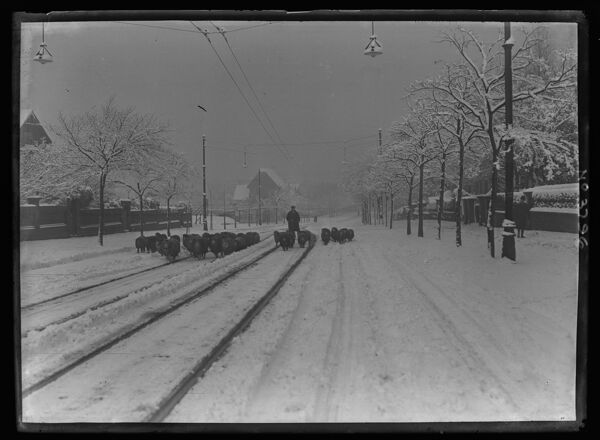
Snow scene. Barrow in Furness Nov 15th 1915
15th November 1915
View towards the Strawberry Hotel along Abbey Road, showing sheep being herded. Quite possibly they were being taken to shelter from the hard snow. It's a surprising photograph, which reminds us of how much the farming community was still an everyday part of the town's life until the early 20th century.
TP157A, Sankey Family Photographic Archive © Cumbria Archives
no.TP157A
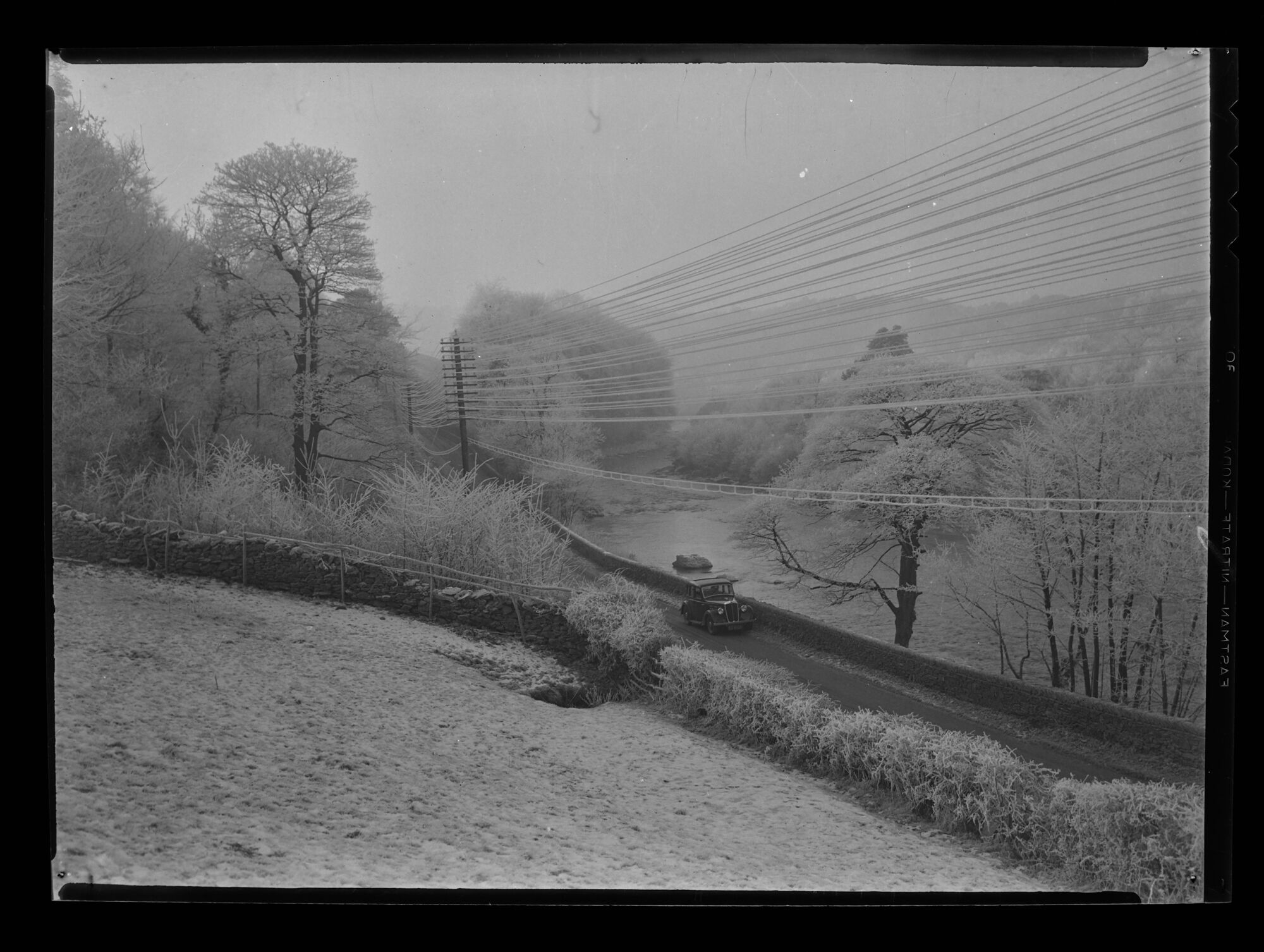
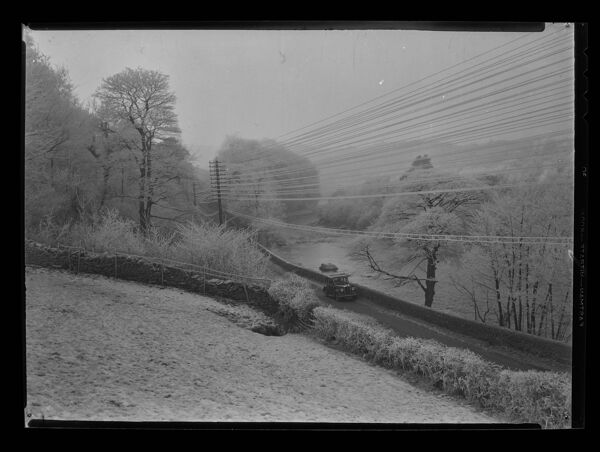
Near Newby Bridge
Circa 1910s
Looking South East from above the main road beside the River Leven, just east of Backbarrow. There is heavy hoar frost on the telephone lines, fields and trees. The Sankey's is parked on the road facing Newby Bridge.
9409, Sankey Family Photographic Archive © Cumbria Archives
no.9409
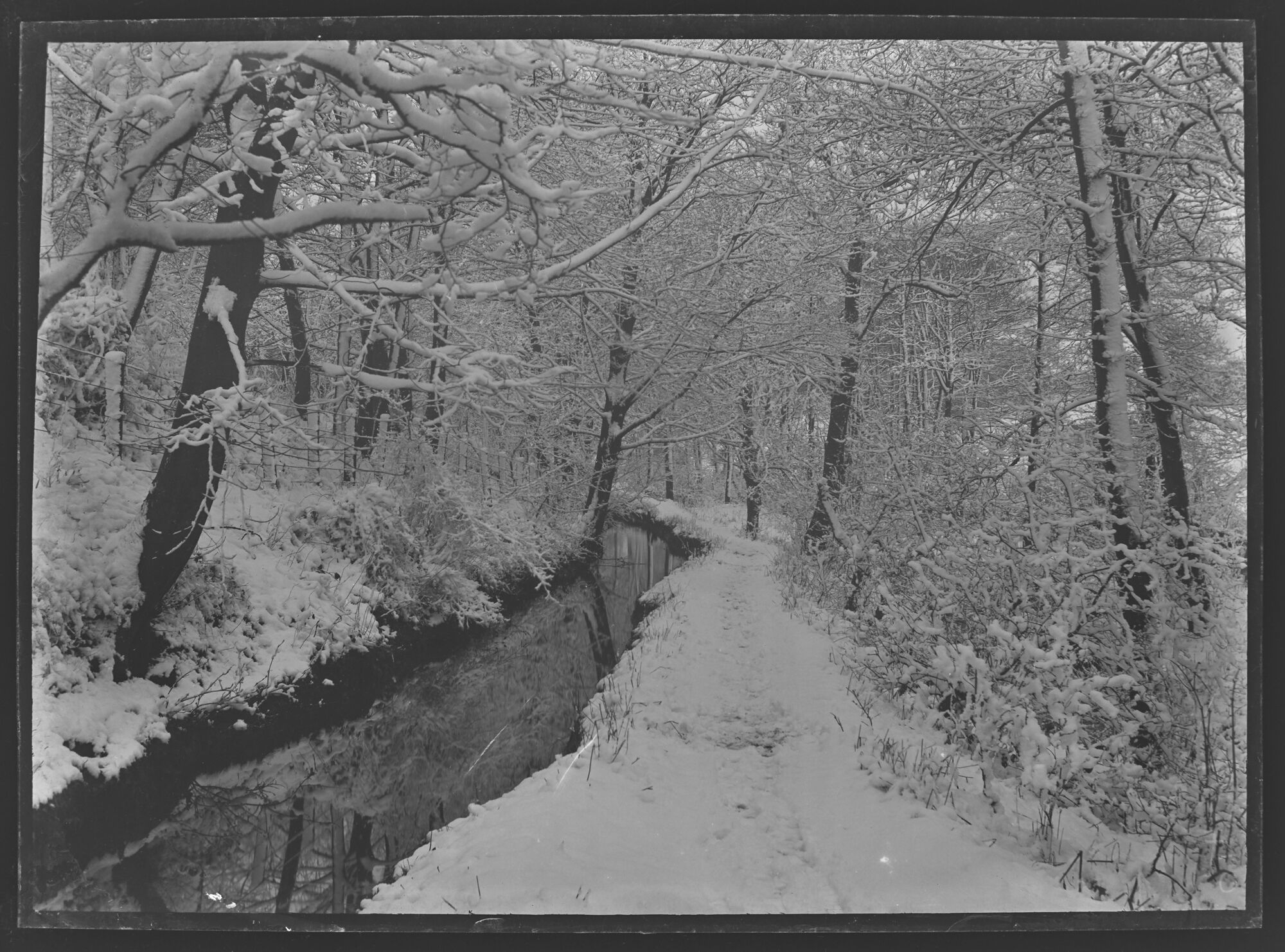
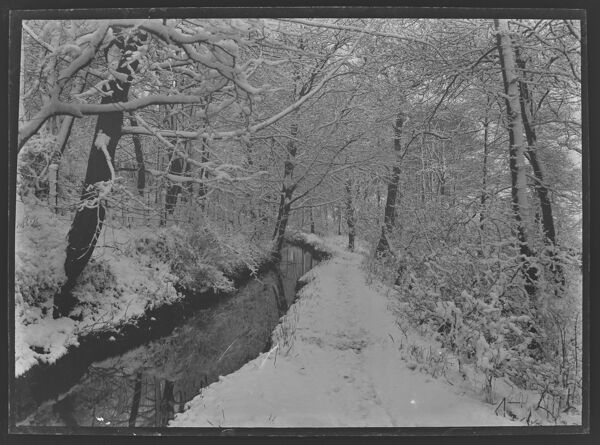
Ennis Wood, Barrow-in-Furness
Early 20th Century
Ennis Wood is close to Bow Bridge; however this is not Mill Beck that runs under the bridge but another man-made water course close by.This is a 'leat', or millrace, and would supply water to a water wheel powering a mill or other machinery.At the peark of activity of Furness Abbey there were three mills along Mill Beck.
Although this could have supplied one of those mills it is likely that it is a more modern construction. We don’t know what it was used for, but it’s likely that it supplied water to Park House Farm.From old newspaper archives we know the farm used water power to drive farm machinery providing “great savings in both time and labour”.
2083, Sankey Family Photographic Archive © Cumbria Archives
no.2083
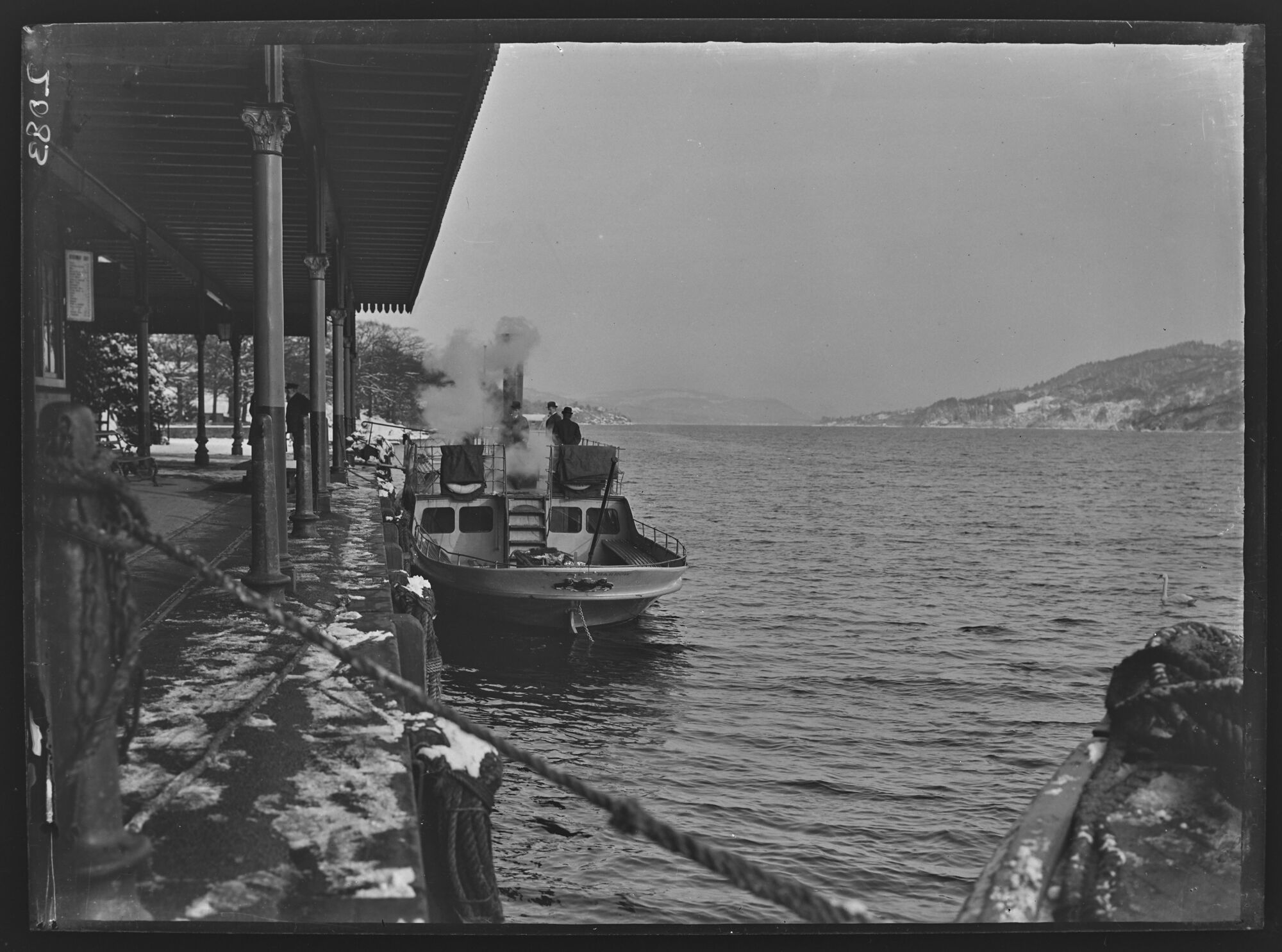
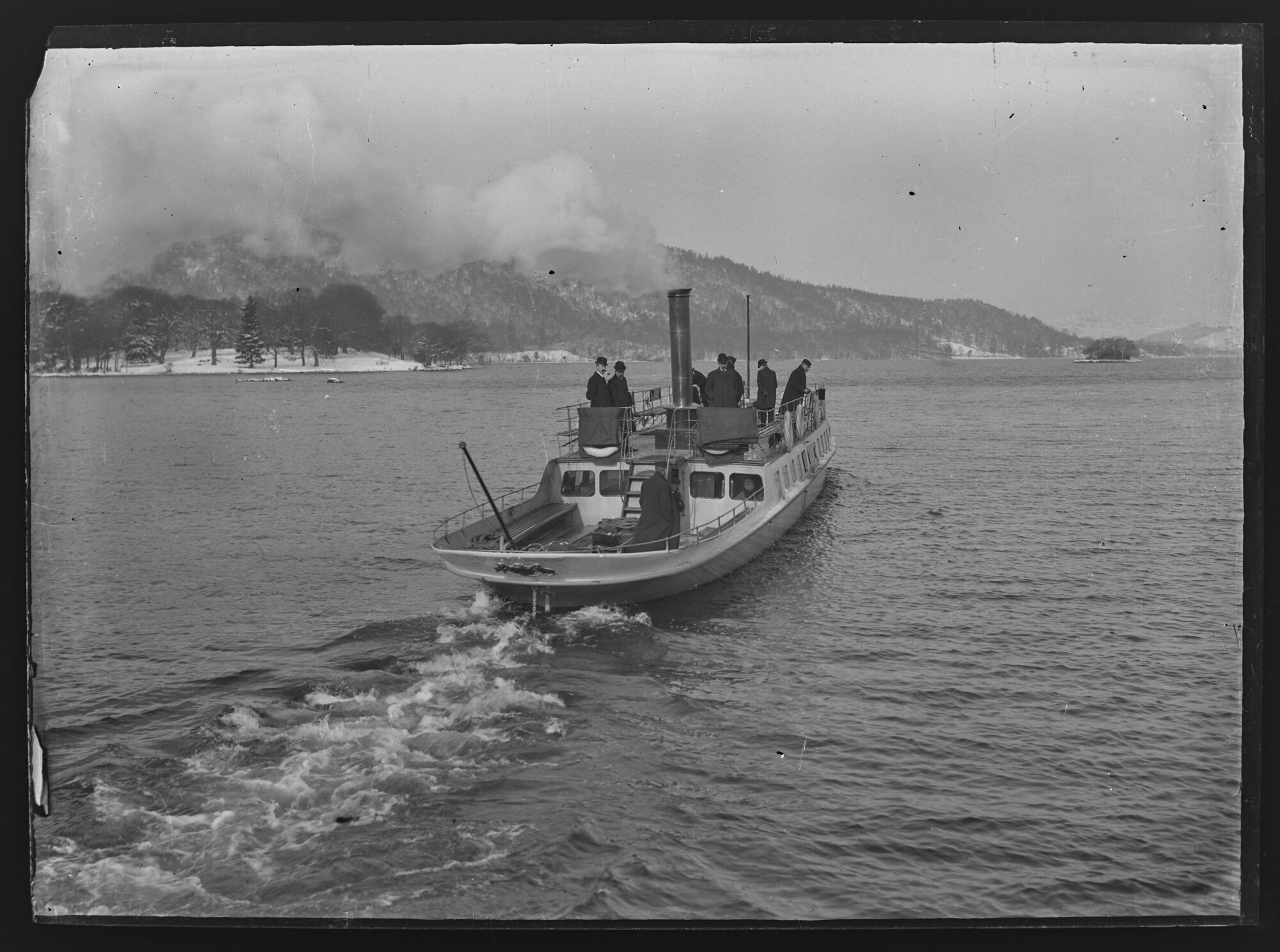
Steam Yacht 'Teal' at Lakeside
Early 1900's
Snow has fallen as we look north up Windermere from Lakeside with the Teal in steam. Four bowler-hatted gents chat on the upper deck, while a crew member chats on the quay. Lined with cast-iron columns supporting the panoramic refreshment room, rails are set in the surface of the quay for hand-propelled coal dollies to feed the steamers.Built by Barrow Shipbuilding Company in 1879 and launched to coincide with the opening of the railway branch from Plumpton, the Teal has its name and port of registration (Barrow) plus a motif on its cruiser stern. the Teal and sister the Cygnet (one of whose lifebelts is fitted to Teal), were the first steel-hulled steamers on the lake.
Steamers ran through winters to provide a public service and during World War One Teal ran this service alone, Cygnet being laid up.
G16, Sankey Family Photographic Archive © Cumbria Archives
no.G16
Skating on Windermere
Circa late 1910s
While ice-skating and curling were enjoyed by many, it would only last for a short period, unless there were prolonged hard frosts. Although ice could form over an inch thick it needed a hard frost before it was fit for skating. Falls of snow would also spoil ice-skating, but by sweeping the ice the enjoyment could continue. Under the wrong condition’s accidents happened, sometimes fatal.
On the Ulverston Canal two teenage boys fell through the ice and were rescued by a soldier, but a third skater drowned. A further fatality occurred at a pond at Mouzell, when a young Dalton boy fell through the ice. The bravery of a local PC was in vain. After running three-quarters of a mile, he plunged into the water, diving under the ice, to try and rescue the boy. The constable was pulled from the water exhausted.
G39, Sankey Family Photographic Archive © Cumbria Archives
no.G39
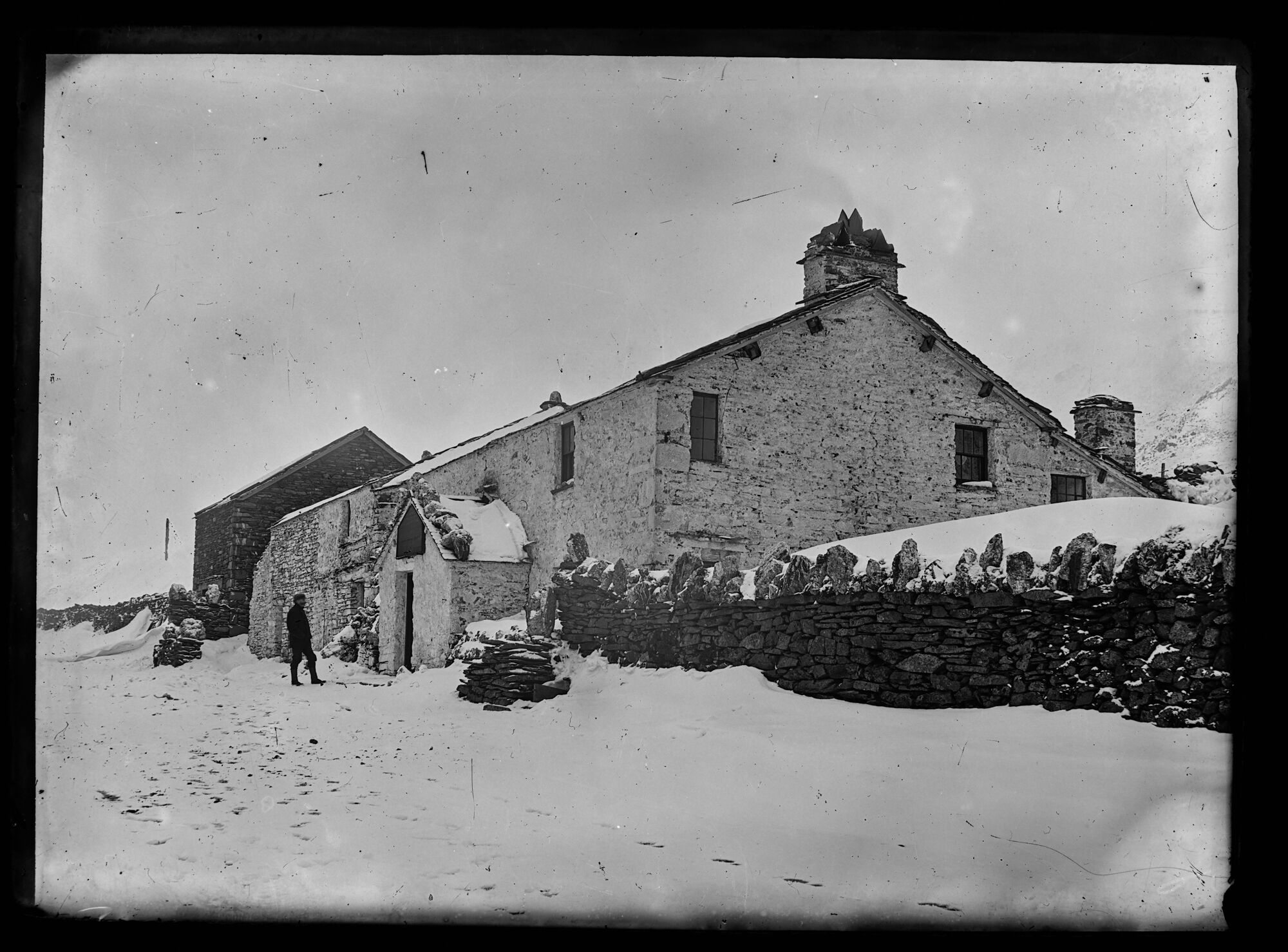
Kirkstone Pass Inn in Winter
Early 20th Century
This 15th century inn awaits the intrepid who complete 'The Struggle', the road that leads up from Ambleside towards Patterdale and Ullswater. At nearly 1,500ft, it is the third highest pub in the country and stands on its own. There are drifts of snow, which tell of the winds across the pass, as do the slate slabs on the gable end roof and smaller stones on the porch.
Today, we might expect a large log fire after reaching such a venue, but with all fuel needing to be carried up the hill I expect it is just a small fire that is warm and snug! Can you see the building in the background? It was built to accommodate the taller coaches of the early 1800s.
G56, Sankey Family Photographic Archive © Cumbria Archives
no.G56
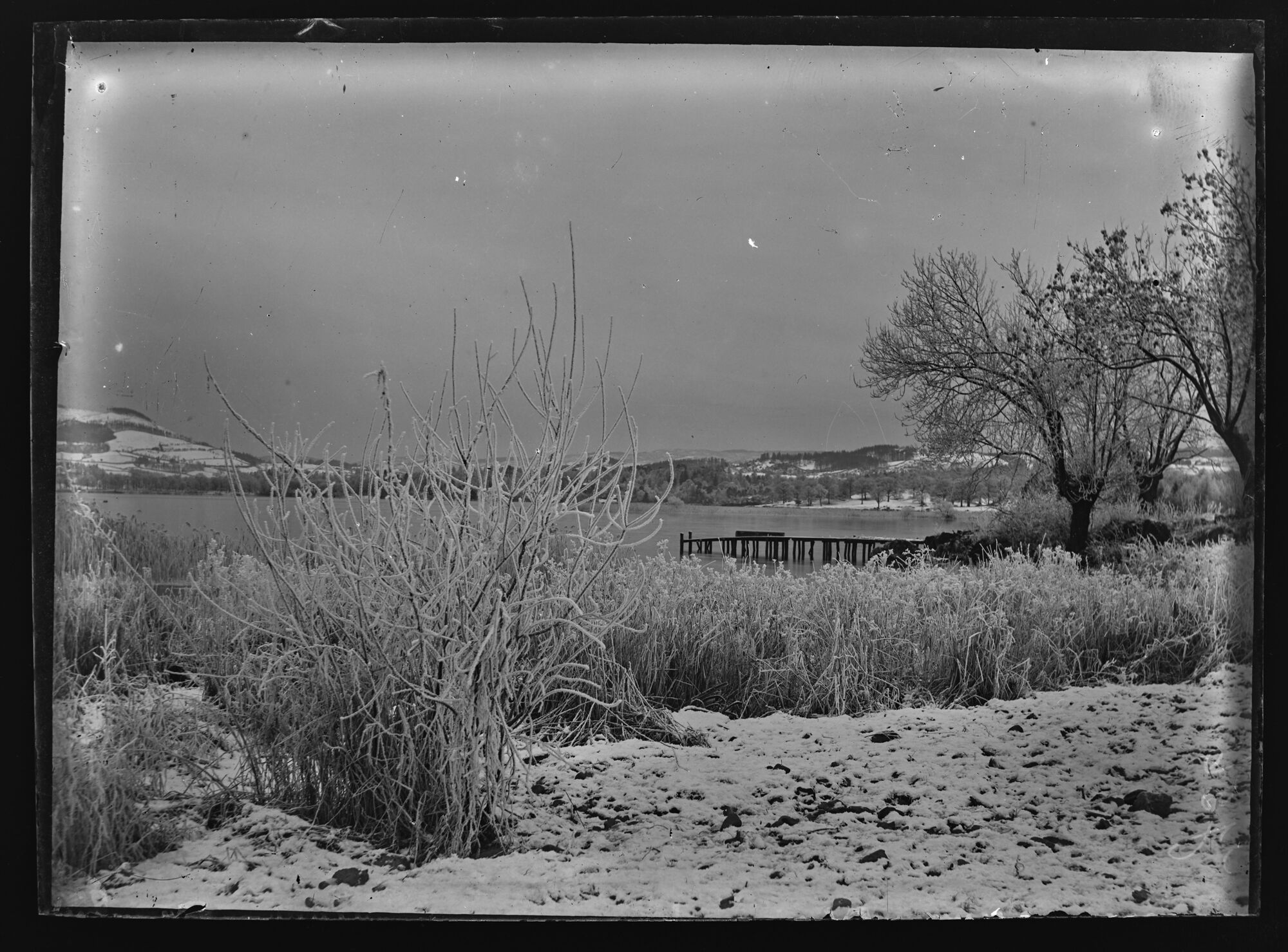
Holme Crag, Windermere
Early 20th Century
A view from Holme Crag on the east side of Windermere looking west to Pullwood house which is veiled by a young willow. There are pollarded willows on the right of the picture and a jetty extends from a low rocky outcrop. In the foreground a band of reeds follows the shoreline and on the opposite side of the lake, in the shallows before Pull Wyke bay, extensive reed beds can be seen. It looks timeless. It is not. The reeds have almost gone.The reed beds were a home for invertebrates, small fish, birds, and mammals; and they captured the silt and excess nutrients in the water preventing algae blooms.
We must restore and conserve this valuable resource.
9425, Sankey Family Photographic Archive © Cumbria Archives
no.9425
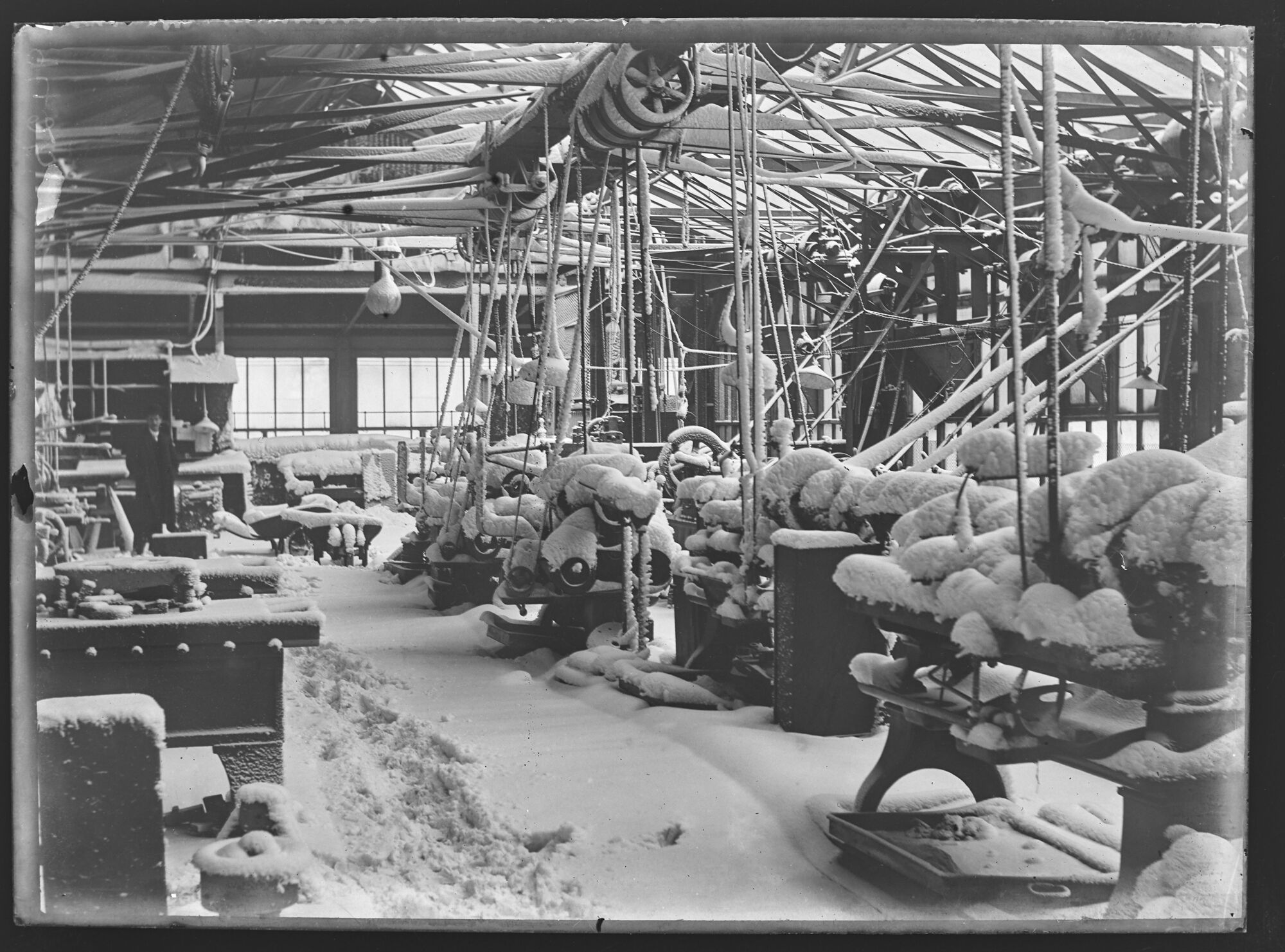
Works Interior, Barrow-in-Furness
Early 20th Century
The interior of a shop at Vickers in the early 20th century. There must be some missing glass in that roof for so much snow to get in. Maybe this part of the building was out of use? There seems to be a couple of inches at least covering those lathes and tables. The only place which looks anything like this in other old photographs is in the shell shop which had a similar low roof in one part.
2010, Sankey Family Photographic Archive © Cumbria Archives
no.2010
Windermere Steam yacht 'Teal'
Circa 1910s
Spot the snow upon Windermere shore, and the overcoats to protect from those cold lake trips across waters that now no longer freeze.
H11AX, Sankey Family Photographic Archive © Cumbria Archives
no.H11AX
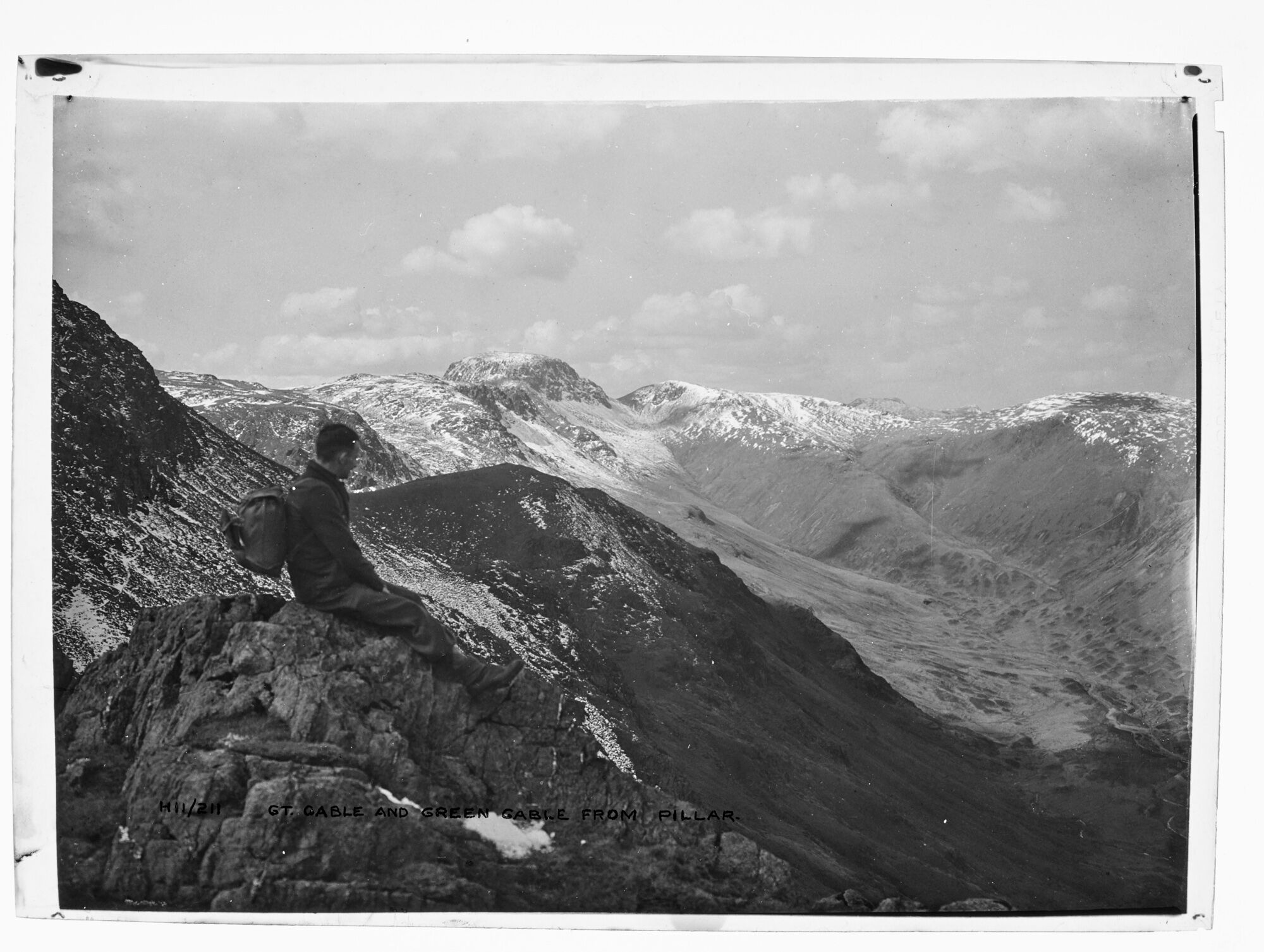
Great Gable from Pillar (image reversed left to right)
Circa 1930s
Reverse print. Great Gable and Green Gable from the path below Pillar with a dusting of snow. A man with a rucksack sits and enjoys the view.